
Last updated November 24, 2026
 Whole-home duct cleaning
 Dryer vent cleaning
 Camera inspection
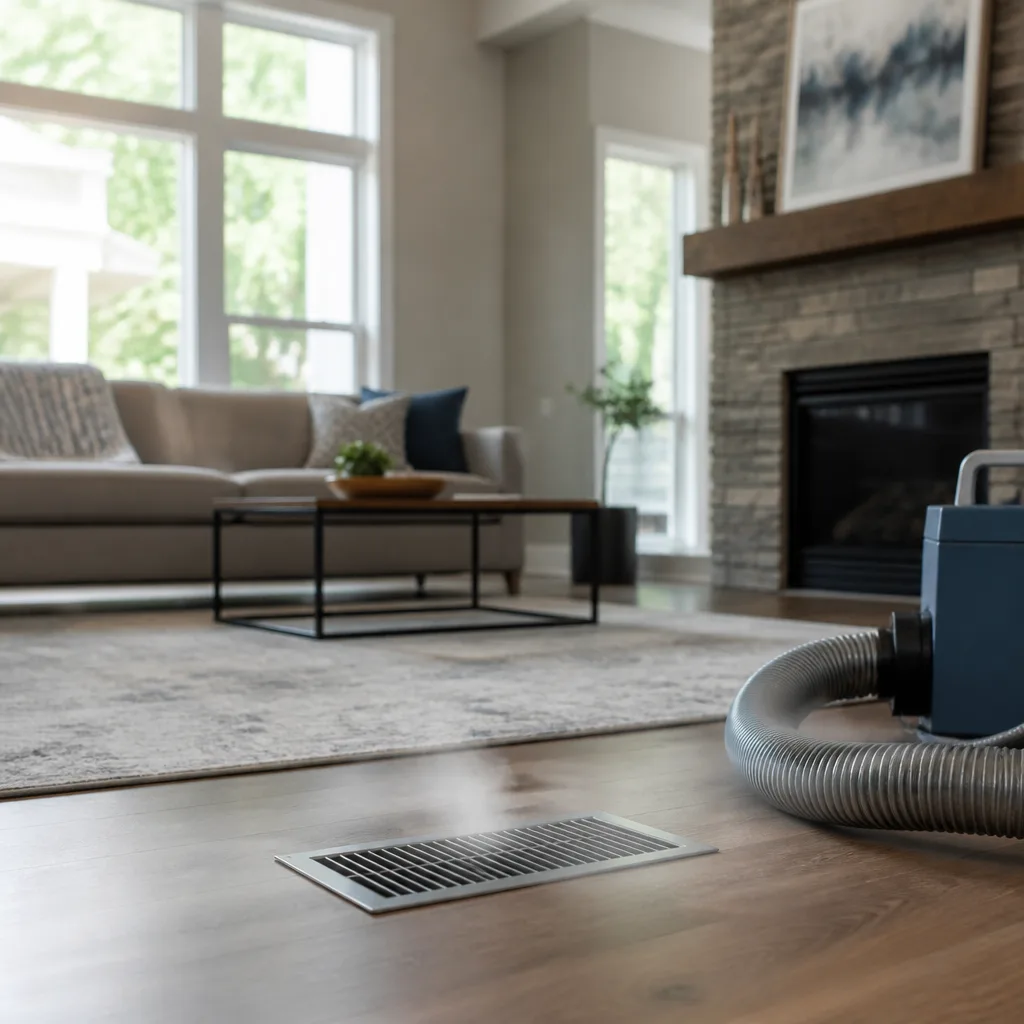 Sanitizing & deodorizing
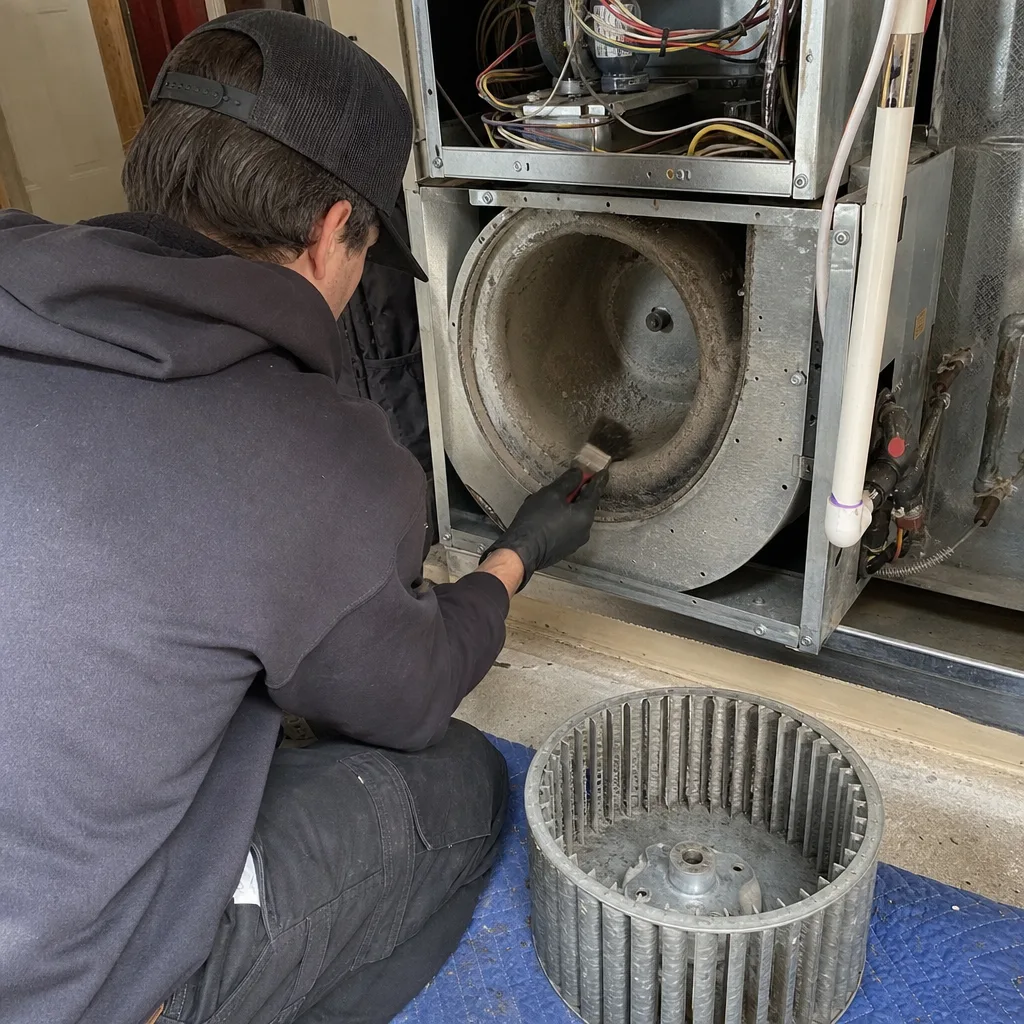
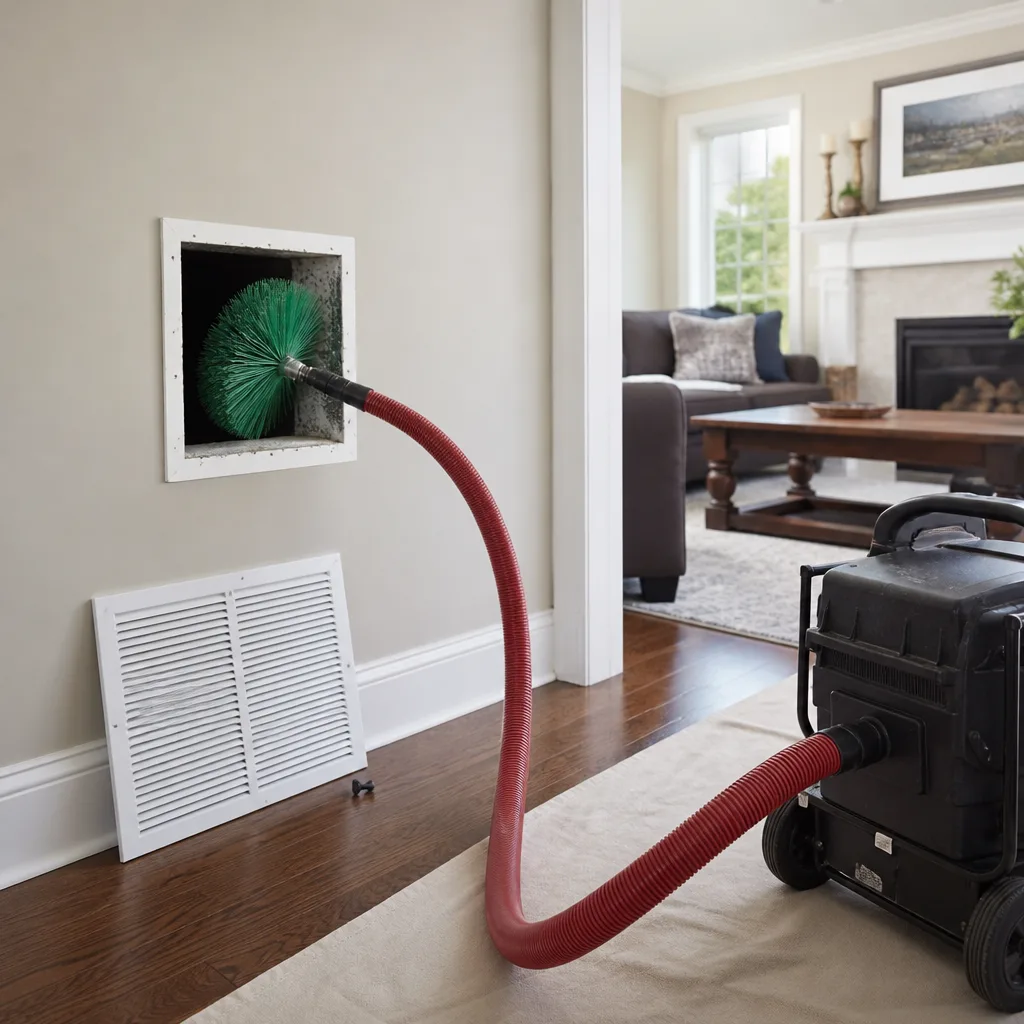
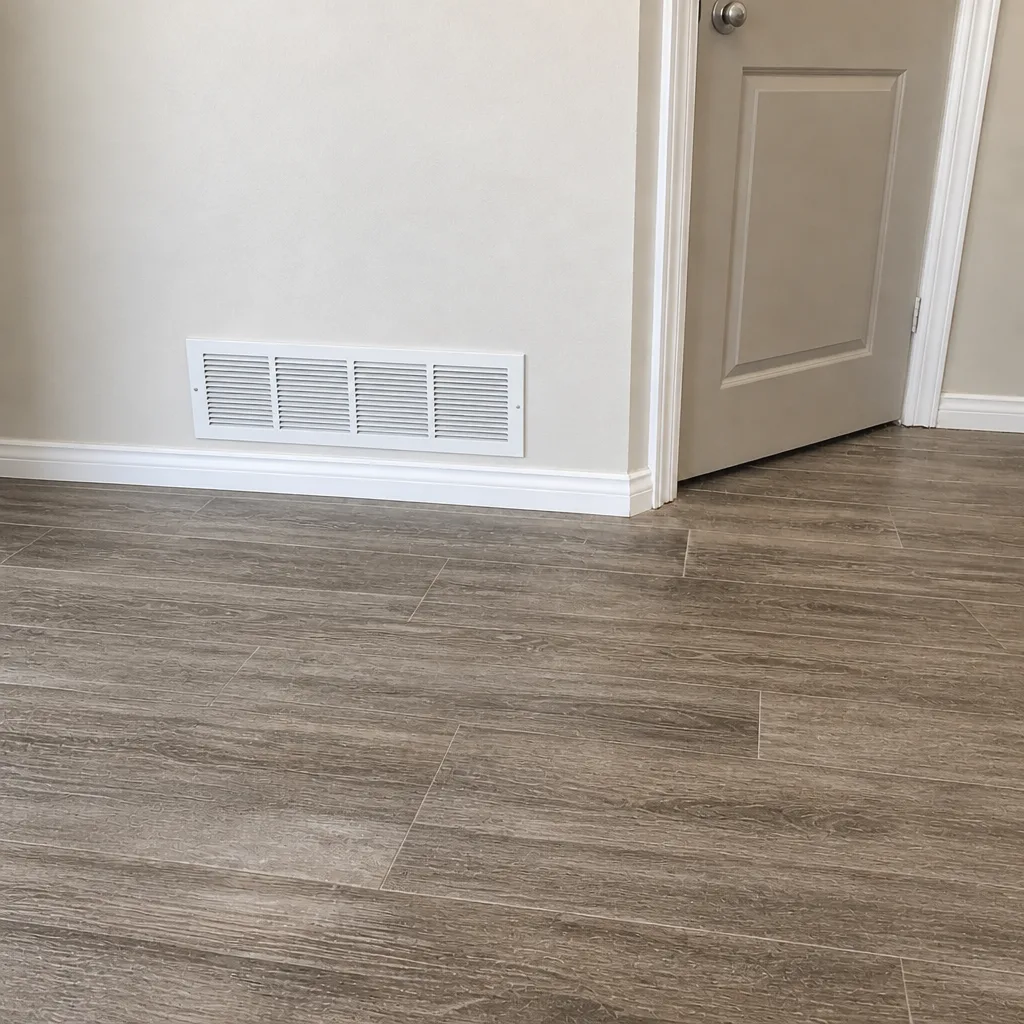
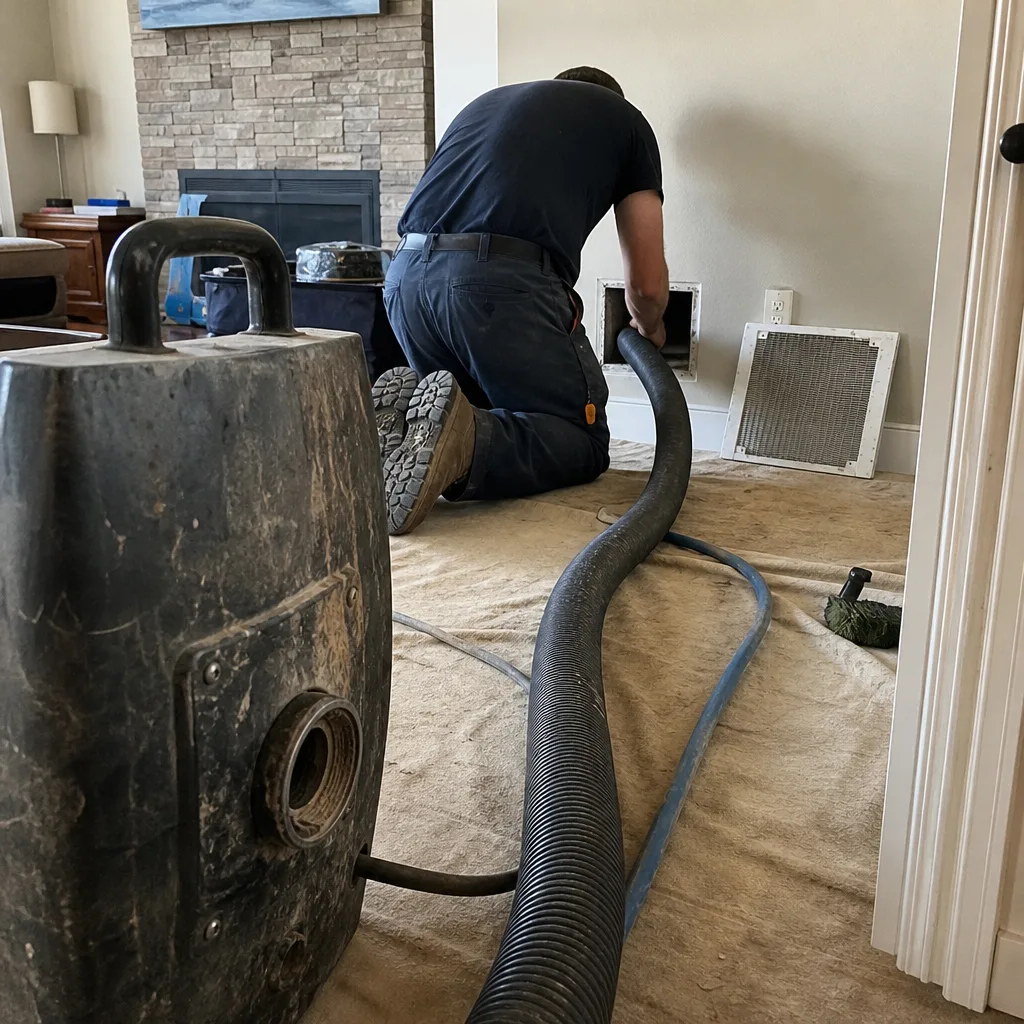
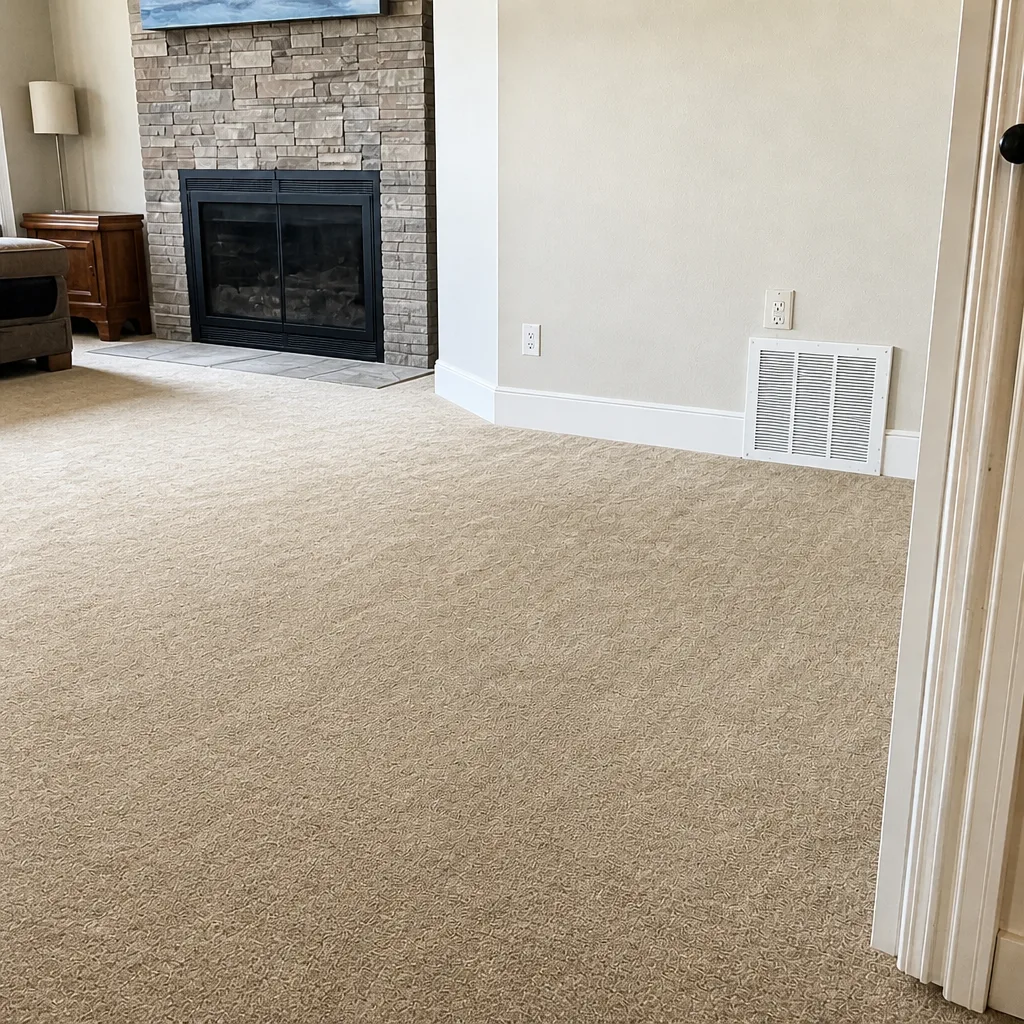
Whole-system duct and dryer vent check with before-and-after photos - you see exactly what came out of your vents
That "$99 whole-house special" is a bait ad - the real number appears once they are in your hallway, or the "clean" is a shop-vac at the register. We photograph the inside of your ducts before and after instead.
Air Duct Cleaning Maintenance Checklist for Cottonwood Heights Homeowners
Changing your MERV-13 filter on schedule won’t catch a disconnected trunk line in your crawl space, and in older Cottonwood Heights construction, that’s not a hypothetical. Most maintenance checklists floating around the internet are really just filter-change reminders dressed up as home care: swap the filter every 90 days, vacuum the return grille, done. That advice has its place, but it misses the failure modes that actually degrade a duct system here. A filter catches what passes through it. It says nothing about the seams that leak, the flex duct that sagged off its collar, the dust that settles in the trunk line after a June remodel, or the odor that lingers in the returns long after the smoke clears.
What follows is a tiered checklist built around those mechanical and air-quality checkpoints: what to look at monthly, what a professional should inspect annually, and what a full deep-service benchmark looks like every few years. Each item ties to a specific failure mode we’ve seen in Cottonwood Heights homes, from post-inversion filter loading to post-renovation debris. You’ll also learn how to log duct performance over time so you notice drift before it turns into a problem.
Quick Answer
A working air duct maintenance checklist for a Cottonwood Heights home has three tiers: monthly visual checks (filter loading, register airflow, unusual odors), an annual professional inspection covering the full system from intake to output, and deep-service benchmarks every 3-5 years that include duct cleaning, sealing, and crawl space or attic duct segment inspection. The goal isn’t to clean ducts constantly. It’s to catch mechanical failures and contamination drift early, before they quietly cost you comfort and energy.
Styles & brands we work with
- Whole-home duct cleaning
- Dryer vent cleaning
- Camera inspection
- Sanitizing & deodorizing
Table of Contents
- Why Filter Reminders Aren’t a Maintenance Plan
- Monthly: The Visual Checks You Can Do Safely
- Annual: What a Professional Inspection Should Cover
- Every 3-5 Years: Deep-Service Benchmarks
- How to Log Duct Performance and Detect Drift
- Crawl Space and Attic Duct Segments: What You Can Check
- When Sanitizing Is Warranted vs. When It’s Oversold
- Cottonwood Heights Indicators: Inversions, Wildfire Smoke, Remodels
Why Filter Reminders Aren’t a Maintenance Plan
A filter is one component of a system with a dozen joints, seams, and transitions that all matter. Change the filter religiously and you can still have a duct system that’s leaking 20% of its conditioned air into an unconditioned attic, or a flex run that came loose from its boot behind a piece of drywall. Neither of those shows up on a filter reminder. Both show up on a proper inspection.
Think about what a duct system actually is. It’s a network of rigid sheet metal, flex duct, boots, dampers, registers, and connections that runs from the air handler through conditioned and unconditioned space and back again. Filters protect the equipment from large particulate. They don’t protect the system from itself. They don’t stop a sagging flex line from pinching off airflow to a bedroom, and they don’t stop a return leak in a crawl space from pulling soil dust, insulation fibers, or pest debris into the living space.
We’ve watched homeowners spend real money on premium filters while a disconnected trunk line in the crawl space leaked for months. The filter was doing its job. The system around it wasn’t. That’s the gap this checklist is built to close.
The second reason filter reminders fail is timing. In Cottonwood Heights, the failure modes aren’t evenly spread across the year. Winter inversion cycles load filters fast. Summer wildfire smoke loads them again. A spring remodel floods the returns with gypsum dust in a single week. A manufacturer’s “every 90 days” schedule doesn’t know any of that. A logged filter-loading rate does. That’s covered in the section on tracking performance.
Monthly: The Visual Checks You Can Do Safely
Monthly checks take about 15 minutes and require no tools beyond a flashlight and a notepad. The point isn’t to fix anything. It’s to notice change and write it down. Skip anything that requires opening a panel, removing a blower door, or crawling into a confined space.
- Check filter loading. Pull the filter, hold it up to a light. If you can’t see light through it, replace it. Note the date and how many days it lasted. A filter that used to last 90 days and now lasts 40 is telling you something.
- Test airflow at each register. Hold a tissue or a piece of tissue paper against the grille. It should flutter firmly at every register. A register that used to blow hard and now barely moves air points to a damper, a crushed flex line, or a leak upstream.
- Smell each return. A dusty smell is normal between cleanings. A musty, sour, or chemical smell is not. Note which return and what it smells like.
- Look at the register faces. Black streaking around the grille edges, visible dust plumes, or discoloration on the surrounding paint are signs of leak or bypass.
- Listen at the air handler. A new rattle, whistle, or whoosh that wasn’t there last month suggests a loose duct connection or a damper that shifted.
- Check the filter slot seal. A filter that doesn’t seal well lets unfiltered air bypass the media and coat the evaporator coil. If the slot is warped or the filter sits loose, note it.
That sixth point matters more than most homeowners realize. A filter that bypasses is worse than no filter in some ways, because it gives you a false sense of protection. The air handler coil downstream of it is where the real damage accumulates.
Keep a simple log. A paper calendar or a note on your phone with the date, what you checked, and what you saw. Fifteen minutes a month, and you’ll have a record you can hand to a technician that shortcuts the diagnostic.
Annual: What a Professional Inspection Should Cover
Once a year, a professional should walk the full system from intake to output. That means supply and return, air handler, coil, accessible duct runs in the attic and crawl space, and the connections at the boots and registers. This is not the same as a cleaning. It’s an inspection. The cleaning recommendation comes after.
Here’s what a thorough annual inspection in a Cottonwood Heights home should include:
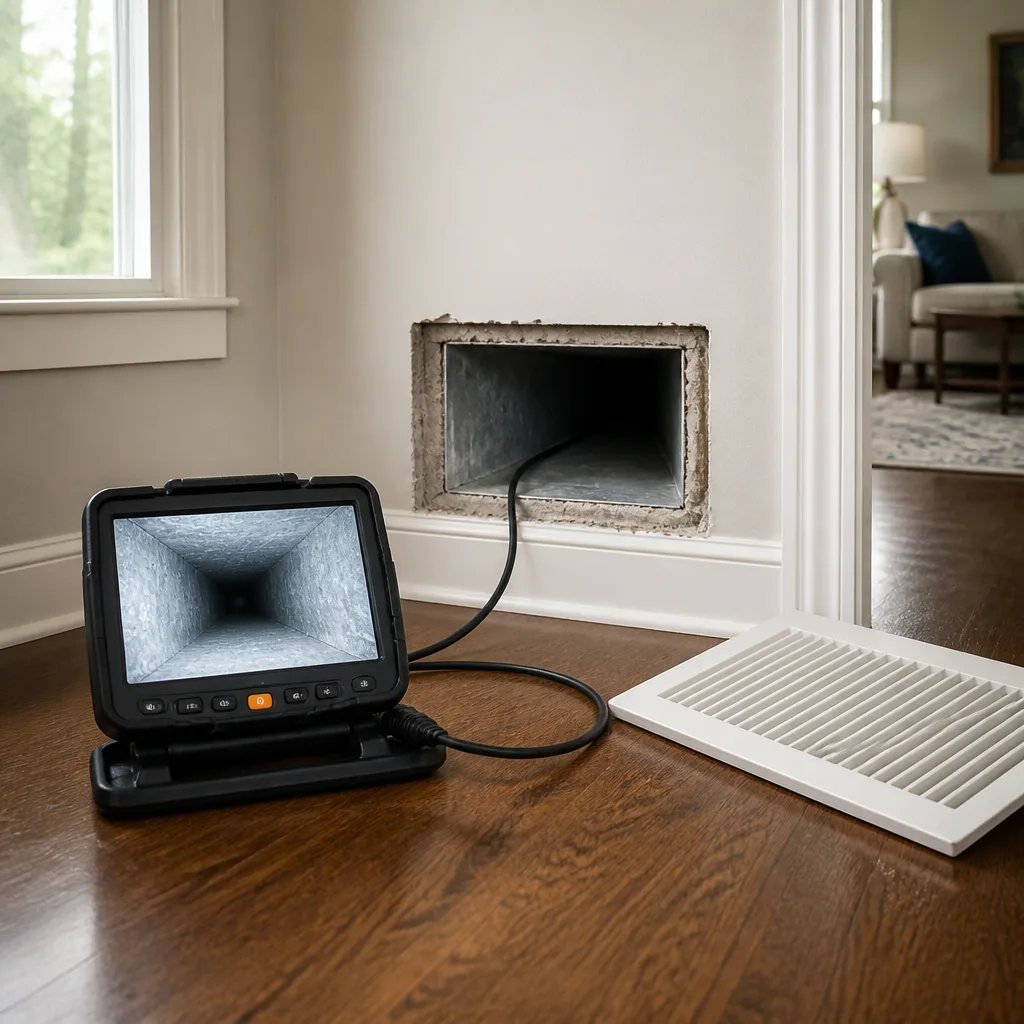
- Camera inspection of accessible duct runs, including the trunk line and the longest flex branches
- Pressure and airflow readings at the air handler and at representative registers
- Visual inspection of the evaporator coil for dust loading and microbial growth
- Seam and joint check at every accessible duct connection, with attention to flex-to-boot collars and trunk-to-branch takeoffs
- Return-side inspection, especially any return that runs through a crawl space or attic
- Filter slot and filter housing check for bypass
- Damper check to confirm each zone still responds
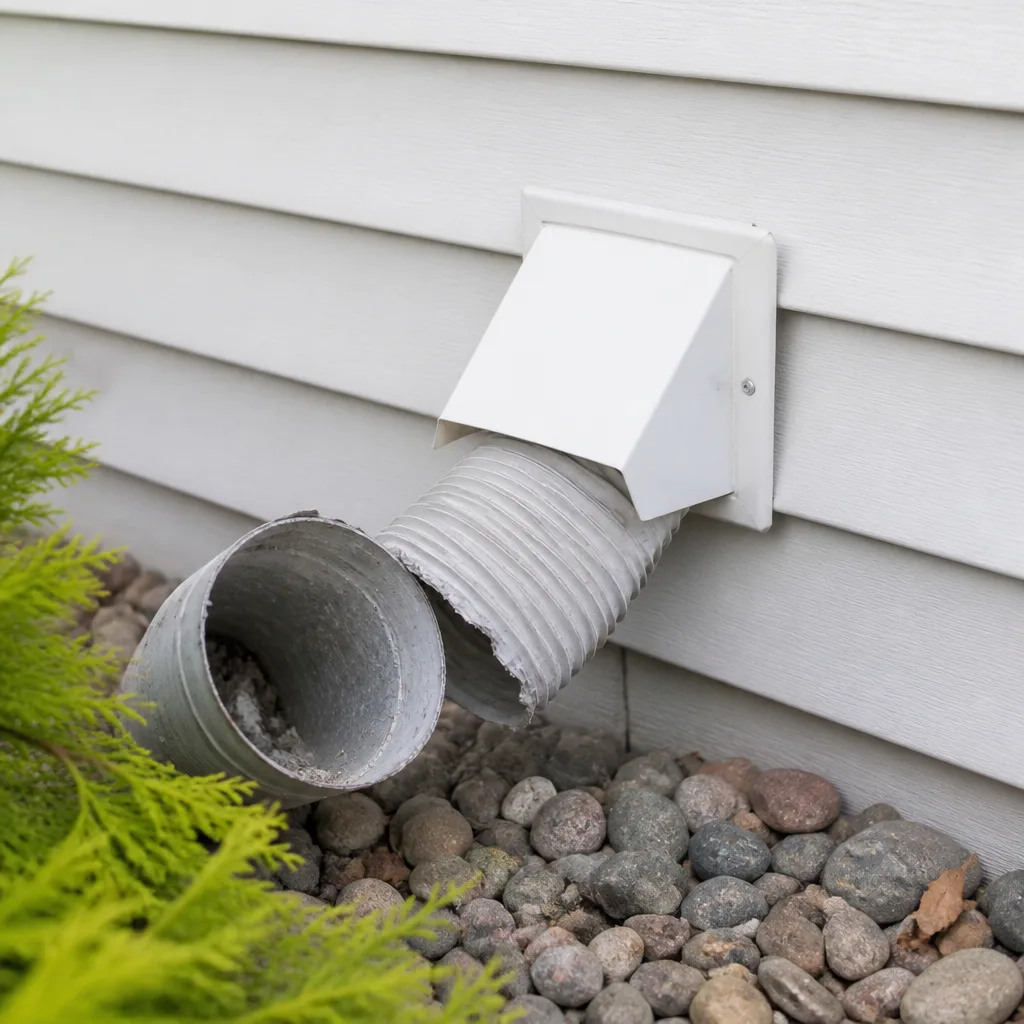
- Dryer vent inspection as part of the same visit, since lint accumulation is a fire concern separate from HVAC cleanliness
- Written report with photos and a clear list of what’s fine, what needs cleaning, and what needs repair
A camera inspection is where most of the real findings are. Dust loading you can see on a register face tells you almost nothing. A camera inside the trunk line tells you whether the interior is lightly dusted, heavily accumulated, or showing microbial growth. Those are three different recommendations.
We use Rotobrush and Nikro negative-pressure systems for the cleaning work itself, and Abatement Technologies equipment when contamination levels call for a higher level of particulate control. The point of naming the equipment is simple: the cleaning method matters. Negative pressure with HEPA filtration keeps dislodged debris out of your living space. A shop vacuum and a brush on a drill does not.
Pair the annual inspection with routine air duct cleaning when the report calls for it. The inspection tells you when. The cleaning executes. If the report says the system is clean, you’ve spent a small amount to know that, and you have a baseline for next year.
Every 3-5 Years: Deep-Service Benchmarks
Every three to five years, depending on what the annual inspections show, a home benefits from a full-system deep service. This isn’t a routine cleaning scaled up. It’s a restoration-grade pass that covers cleaning, repair, sealing, and sanitizing in a sequence that addresses the whole system.
The benchmark items:
- Full-system cleaning under negative pressure. Every supply and return run, the trunk, the air handler, and the coil, with HEPA filtration and containment throughout the work.
- Duct repair and sealing. Any disconnects, crushed flex runs, torn duct board, or gaps at seams get repaired and sealed. Clean ducts with open leaks degrade fast.
- Coil cleaning. A dust-loaded evaporator coil drags down efficiency and holds moisture. This is part of HVAC cleaning and belongs on the same visit as the duct work.
- Sanitizing where warranted. A Guardsman-grade sanitizing treatment for microbial and odor control, applied only when contamination thresholds justify it. More on that below.
- Filtration and air-quality hardware assessment. If the existing filter housing is undersized or the home would benefit from a media cabinet or a whole-home air cleaner, this is when to plan it. We’re authorized to service and recommend Honeywell and Aprilaire systems, which means the assessment and the upgrade can be handled by the same team.
- Dryer vent cleaning. Lint accumulation in a dryer vent is a fire concern that has nothing to do with HVAC cleanliness. It belongs on the deep-service list. See dryer vent cleaning for what that work covers.
What separates a deep service from a routine cleaning is that it addresses failure modes, not just dust. A duct system that’s clean but leaking will be dirty again in a year. A system that’s clean, sealed, and running on a properly sized filter will hold its condition far longer. Clean ducts. Sealed ducts. Healthy air. That’s the sequence.
The 3-5 year interval is a benchmark, not a rule. Homes near a busy road, homes with pets, homes with a family member who has allergies or asthma, and homes that have just been through a renovation may need the deep-service pass sooner. The annual inspection is how you know.
How to Log Duct Performance and Detect Drift
A duct system rarely fails suddenly. It drifts. Airflow drops by a little, a filter starts loading faster, a register gets a bit weaker. By the time a homeowner notices a comfort problem, the drift is months old. Logging three simple measurements catches it early.
Measurement 1: Airflow at registers. The tissue test is qualitative, which is fine for monthly checks. For a log, use a cheap handheld anemometer or a flow hood if you want precise numbers. Measure at the same register, same damper setting, same filter condition each time. A 10-15% drop across a season is worth investigating.
Measurement 2: Temperature differential. With the system running in cooling mode, measure the air temperature at a return grille and at a supply register. The difference between them is your temperature split. A healthy split falls within the range your system was designed for. A split that narrows over time points to a leak, a dirty coil, or a duct that’s lost its insulation. In heating mode, the same logic applies in reverse.
Measurement 3: Filter loading rate. Record the date you install a filter and the date it needs replacing. Track the interval. A shortening interval is the earliest signal that something upstream or downstream has changed: more particulate in the return, a duct leak pulling in unfiltered air, or a bypass around the filter slot.
Log all three in the same place. A notebook, a spreadsheet, or a note on your phone. Three numbers, taken at the same time each month, tell you more about your duct system than any single professional visit. When you do call a technician, hand them the log. The diagnostic conversation goes faster and the recommendation gets more specific.
Logging also protects you from unnecessary service. If your numbers are stable, your system is fine, and a cleaning recommendation should come with a reason. A log makes that conversation honest in both directions.
Crawl Space and Attic Duct Segments: What You Can Check
Most of the failure modes we see in Cottonwood Heights homes are in the duct segments running through crawl spaces and attics, not in the conditioned space. Those segments are also the ones homeowners are most likely to skip, because the access is uncomfortable and the inspection is easy to defer.
Here’s the safe split between what you can check and what needs equipment and training.
Safe for a homeowner to check:
- Visual condition of any accessible duct segment where you can see it from a safe standing position without entering a confined space
- Sagging or separated flex duct visible from an attic access hatch or a crawl space door
- Duct insulation that’s torn, compressed, or missing at joints
- Moisture staining or condensation on duct surfaces in a crawl space
- Pest activity signs around duct runs (droppings, nesting material, chew marks)
Requires professional equipment and training:
- Entering a confined crawl space or attic, which carries real fall, respiratory, and electrical hazards
- Camera inspection inside the duct interior
- Pressure and airflow measurement at boots and takeoffs
- Sealing seams, repairing flex-to-boot connections, or replacing damaged duct board
- Any work near the air handler, electrical connections, or gas appliances
Crawl spaces in Cottonwood Heights homes present a specific pattern worth knowing. A return duct that runs through a vented crawl space can pull soil dust, insulation fibers, and moisture-laden air into the living space, especially when the return is leaking. That shows up as persistent dust and a musty smell that filters into the house from the floor registers closest to the crawl space. If you notice that pattern, it’s time for an inspection.
The same logic applies in attics. Flex duct in an attic takes the worst of the temperature swings. It sags, it compresses, and it loses insulation. A run that was fine when installed can be crushed between the joists within a few years if it wasn’t supported correctly. Camera inspection catches it. A visual check from the hatch may not.
When Sanitizing Is Warranted vs. When It’s Oversold
Sanitizing has a real place in duct maintenance, and it’s also one of the most frequently oversold services in the industry. The distinction comes down to contamination thresholds.
Sanitizing is warranted when:
- A camera inspection shows visible microbial growth inside the ductwork, not just dust
- There’s persistent odor coming from the returns that cleaning alone doesn’t clear
- There’s been a water intrusion event that affected a duct run
- A pest infestation has left residue inside the duct system
- Smoke or fire residue has entered the duct network
Sanitizing is not warranted when:
- The system has been cleaned and inspected and shows only normal household dust
- There’s no odor and no visible microbial growth
- The service is being pitched as a routine add-on before any inspection has been done
- It’s being offered as a substitute for cleaning the system instead of as a step after cleaning
The order of operations matters. Sanitizing without cleaning first means applying a biocide over dust and organics. The biocide can’t reach the surface it needs to reach, and the treatment is ineffective. Cleaning first, then sanitizing where thresholds warrant it, is the correct sequence. That’s how we use Guardsman-grade sanitizing treatments: as a step after cleaning and inspection, not as a routine add-on.
If a technician recommends sanitizing before they’ve inspected the ducts with a camera, ask why. The answer should reference a specific observation. “It’s standard practice” is not a threshold case.
Cottonwood Heights Indicators: Inversions, Wildfire Smoke, Remodels
Cottonwood Heights sits on the east bench beneath the Wasatch, which shapes how duct contamination builds through the year. Three local patterns deserve their own line on your checklist.
Post-inversion filter loading. Winter inversion cycles trap particulate under the valley ceiling, and that particulate loads a filter faster than typical household dust. A filter that lasts 90 days in August may last 45 days in January. Watch the loading rate during inversion season; it’s the single most reliable indicator of when your system is working harder than usual.
Post-wildfire odor persistence. Summer wildfire smoke events push fine particulate and odor compounds into return air. When the smoke clears, the odor doesn’t always clear with it. Odor lingering in the returns a week or more after an event is a sign the duct system needs attention beyond a filter change. Cleaning the system clears it. Sanitizing is evaluated after cleaning.
Post-renovation debris contamination. Any project that opens drywall, moves insulation, or sanding drywall compound sends debris into the returns. A single kitchen or bath remodel can load a return duct faster than a year of normal use. If you’ve had a renovation, put a duct inspection on the calendar within a few months of completing the project, not on your normal cycle.
If you’ve recently bought a home in Cottonwood Heights, add one more item: verify the last cleaning or inspection date with the seller. Households that sell frequently have undocumented duct history, and on the east bench, homes that traded hands during a winter inversion or a summer smoke season are more likely to need a first-pass inspection.
The full-system picture matters here. Cleaning, sealing, HVAC cleaning, dryer vent work, and sanitizing belong under one provider because the findings cross between them. For a general overview of the service area and full scope, see Cottonwood Heights Air Duct Cleaning.
Common Mistakes to Avoid
- Treating the filter as the whole maintenance plan. A filter catches particulate. It does not stop leaks, disconnects, or microbial growth. The annual inspection is what catches those, and skipping it leaves the biggest failure modes uncovered.
- Cleaning without sealing. A cleaned duct system with open seams and disconnected runs will be dirty again in a year. Repair and sealing belong on the same visit as cleaning, not on a separate quote cycle.
- Sanitizing instead of cleaning. A biocide over accumulated dust doesn’t reach the surface it needs to. The order is clean, inspect, then evaluate for sanitizing based on what the camera shows.
- Ignoring the dryer vent. Lint accumulation in a dryer vent is a fire risk that has nothing to do with HVAC cleanliness. It belongs on the maintenance list even if the rest of the system is clean.
- Skipping the crawl space because it’s uncomfortable. The returns running through a vented crawl space are where dust, moisture, and pest debris enter the living space. If you can’t safely inspect them, get a professional camera inspection on the calendar.
- Not logging airflow and temperature. Duct performance drifts, and without a log, drift goes unnoticed until a comfort problem is significant. Three measurements a month prevent that.
- Forgetting the post-renovation inspection. A single remodel loads return ducts faster than a year of normal use. If you finished a project, add a duct inspection to the calendar within a few months, especially in Cottonwood Heights where the older housing stock has more duct board and flex to damage.
See the difference
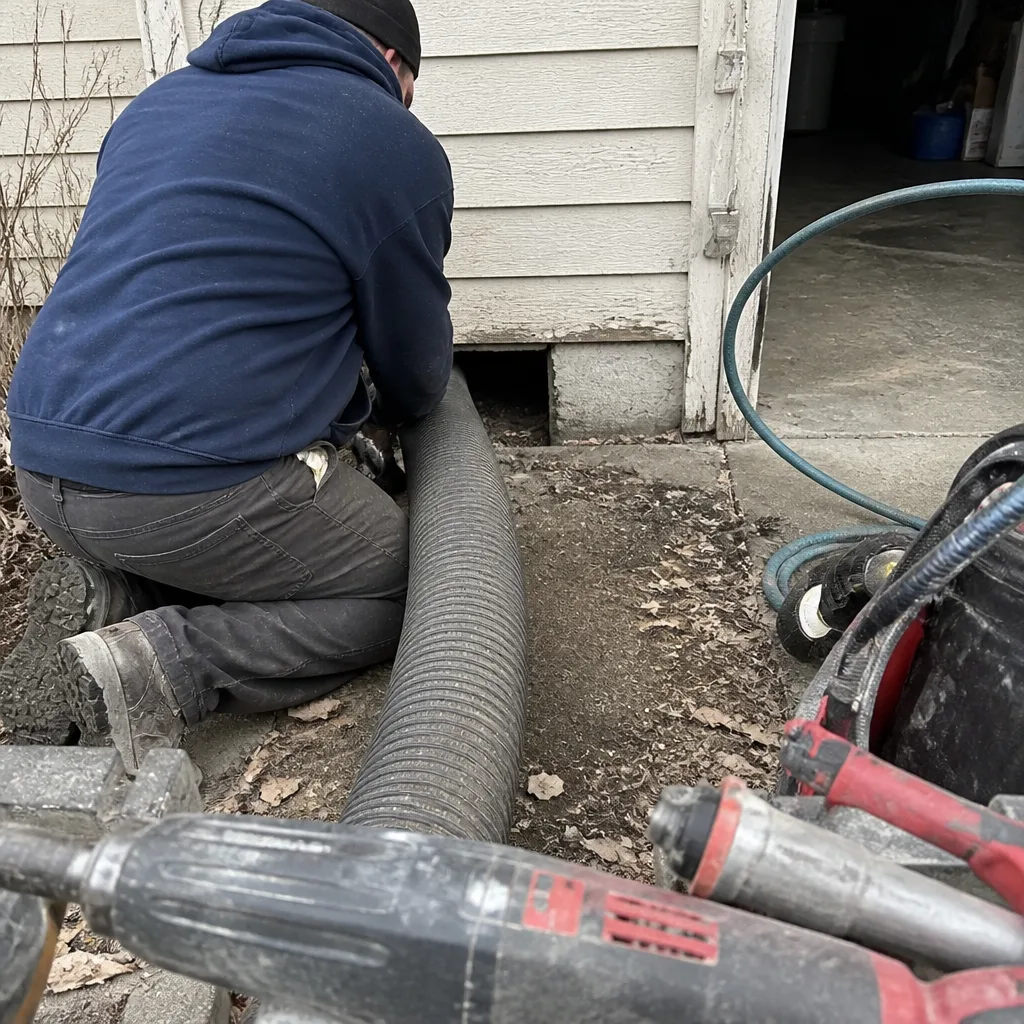 Before
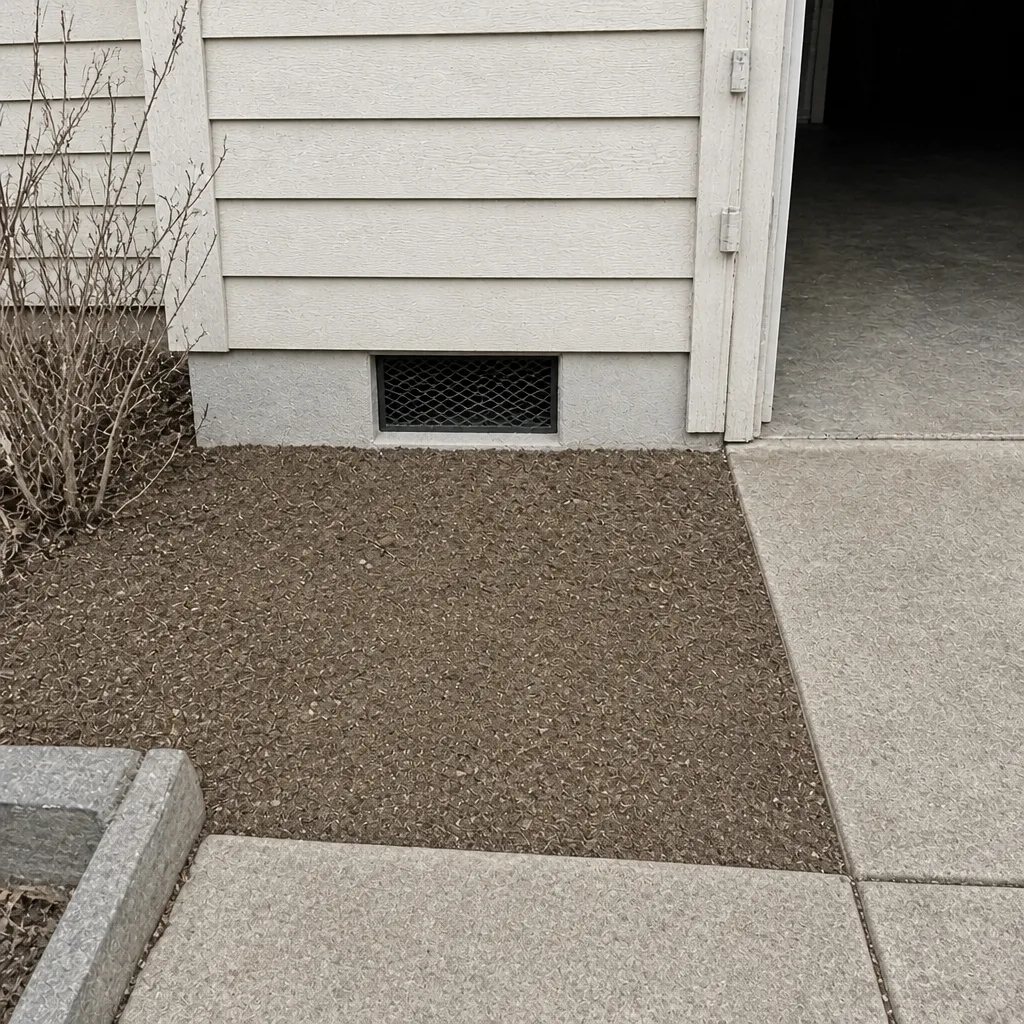 After
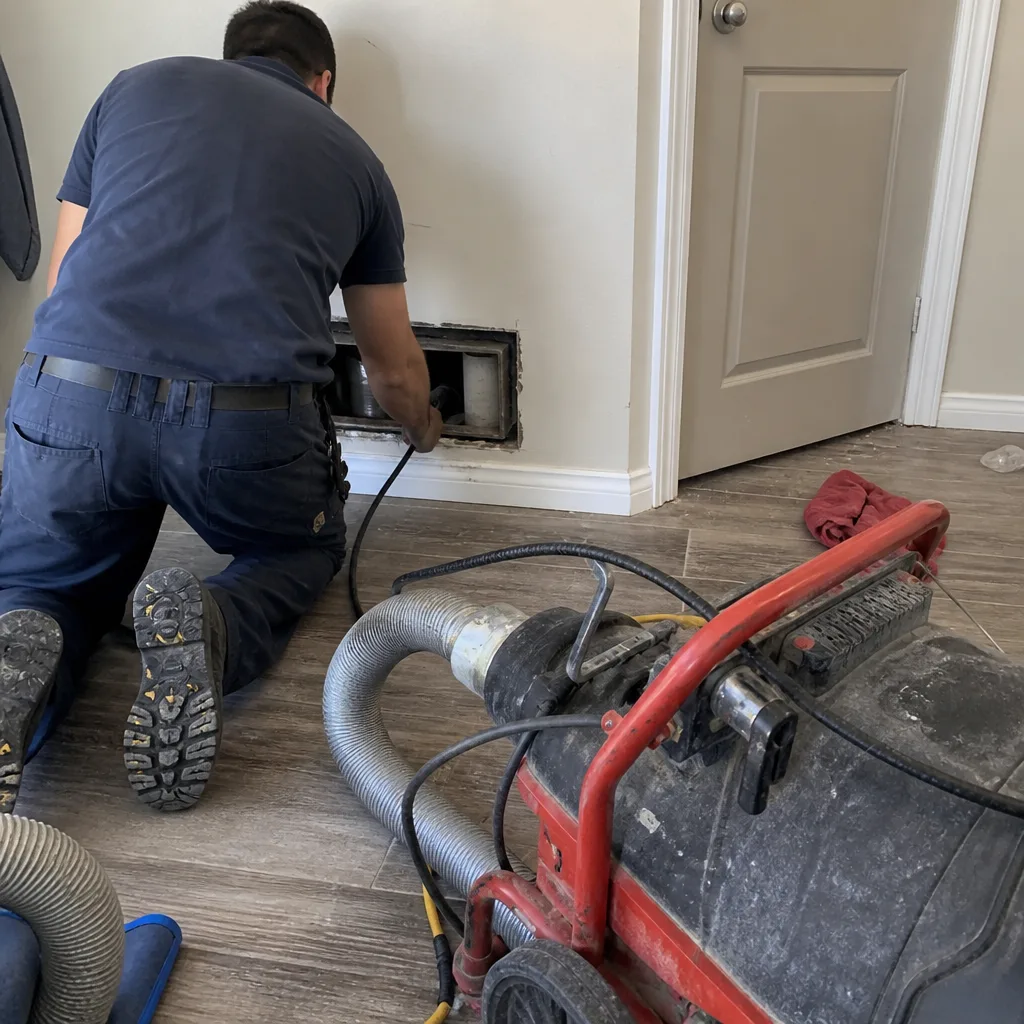 Before
 After
 Before
 After
When to Call a Professional
Call a professional when your monthly checks show a change you can’t explain: a register that lost airflow, a return that smells musty, a filter that’s loading faster than it used to. Call after any renovation that opened drywall or disturbed insulation, after a wildfire smoke event leaves odor in the returns, or when it’s been three to five years since the last deep-service pass and you don’t have a record of a professional inspection. Call before you plan a filtration upgrade, so the assessment and the hardware come from the same team. And call if you suspect a duct problem in a crawl space or attic, where a leak can pull soil dust and moisture into the living space without any obvious sign in the conditioned rooms.
Cottonwood Heights Air Duct Cleaning offers free estimates in Cottonwood Heights. Call (866) 937-8903. We answer 24/7. Fast dispatch from 7am to 7pm, Sunday through Friday. The local pro is licensed and insured as their state requires, and you get one flat price per system agreed before work starts, with before-and-after photos of your own ducts.
Frequently Asked Questions
Most Cottonwood Heights homes need a professional deep-service cleaning every three to five years, with an annual inspection in between. That interval shortens for homes with pets, allergy sufferers, recent renovations, or duct runs through vented crawl spaces. The annual inspection is what tells you whether your specific system is on the standard schedule or needs an earlier pass.
Yes. Winter inversion cycles trap particulate under the valley ceiling, and that loads filters faster than typical household dust. Check the filter every two to three weeks during inversion season instead of waiting for your usual replacement date, and log how long each filter lasts so you can see the pattern from year to year. Call (866) 937-8903 for a duct inspection if odor or airflow changes persist after the inversion clears.
Pricing in Cottonwood Heights is per system, not per vent, which is the honest way to buy it. A low per-vent teaser almost always ends in a larger invoice once the technician is on site. We give one flat price per system agreed before work starts, with the written estimate setting the final number. Call (866) 937-8903 for a free estimate; the number is specific to your system, not a coupon figure.
A cheaper quote usually reflects a shop vacuum and a brush rather than professional negative-pressure equipment with HEPA filtration. Rotobrush and Nikro systems with HEPA capture are what keep dislodged debris out of your living space. A cheap quote that leaves contamination in the air or misses the trunk line, the coil, or the crawl space segments isn’t the same service. Call (866) 937-8903 and we’ll walk through what a whole-system job actually covers.
Ask for before-and-after photos of your own ducts, including the trunk line and the return runs. A camera inspection report matches what a proper job leaves behind. If a provider can’t produce photos of your specific system, that’s a signal. Call (866) 937-8903 to schedule an inspection and see the report before any work is recommended.
Dryer vent cleaning is a separate service from air duct cleaning and belongs on its own maintenance schedule. Lint accumulation in a dryer vent is a fire risk independent of HVAC cleanliness, and it’s often skipped because it’s not part of the duct system homeowners think about. We treat it as a core service, not an add-on. Call (866) 937-8903 to schedule it alongside a duct inspection.
The Bottom Line
The maintenance checklist that actually protects a Cottonwood Heights home is tiered, not a filter reminder. Monthly visual checks catch drift early. An annual professional inspection with camera work catches the mechanical failures a homeowner can’t see. A deep-service benchmark every three to five years handles cleaning, repair, sealing, and sanitizing in the right sequence. Log airflow, temperature differential, and filter loading rate so you notice change before it becomes a comfort problem. Watch the local patterns: inversion-season filter loading, post-wildfire odor in the returns, and post-renovation debris in the ducts. When your log says something changed, or when the annual inspection says the system needs service, getting the whole scope under one provider is what keeps the system performing. Clean ducts. Sealed ducts. Healthy air.
Call (866) 937-8903 for a free estimate. We answer 24/7. Fast dispatch from 7am to 7pm, Sunday through Friday.
Written by the team at Cottonwood Heights Air Duct Cleaning.