
Last updated November 24, 2026
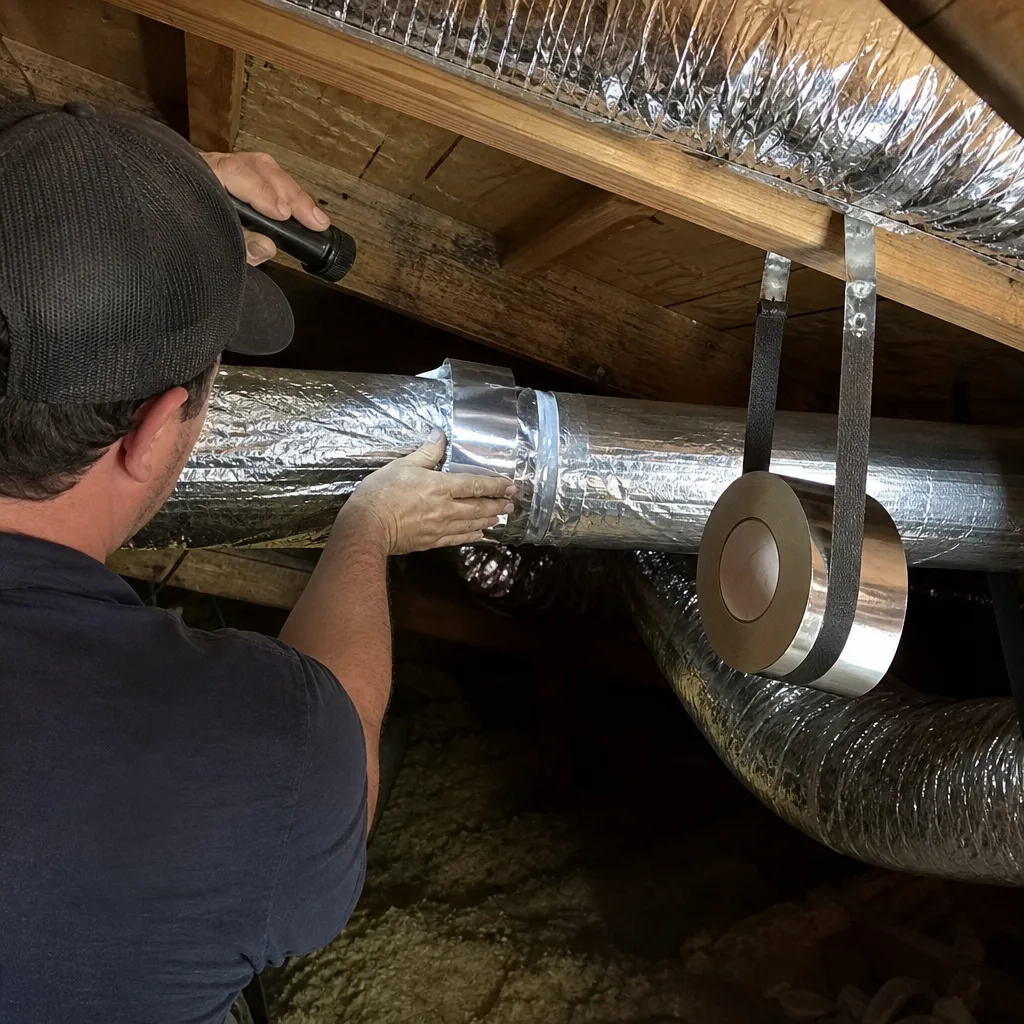
 Whole-home duct cleaning
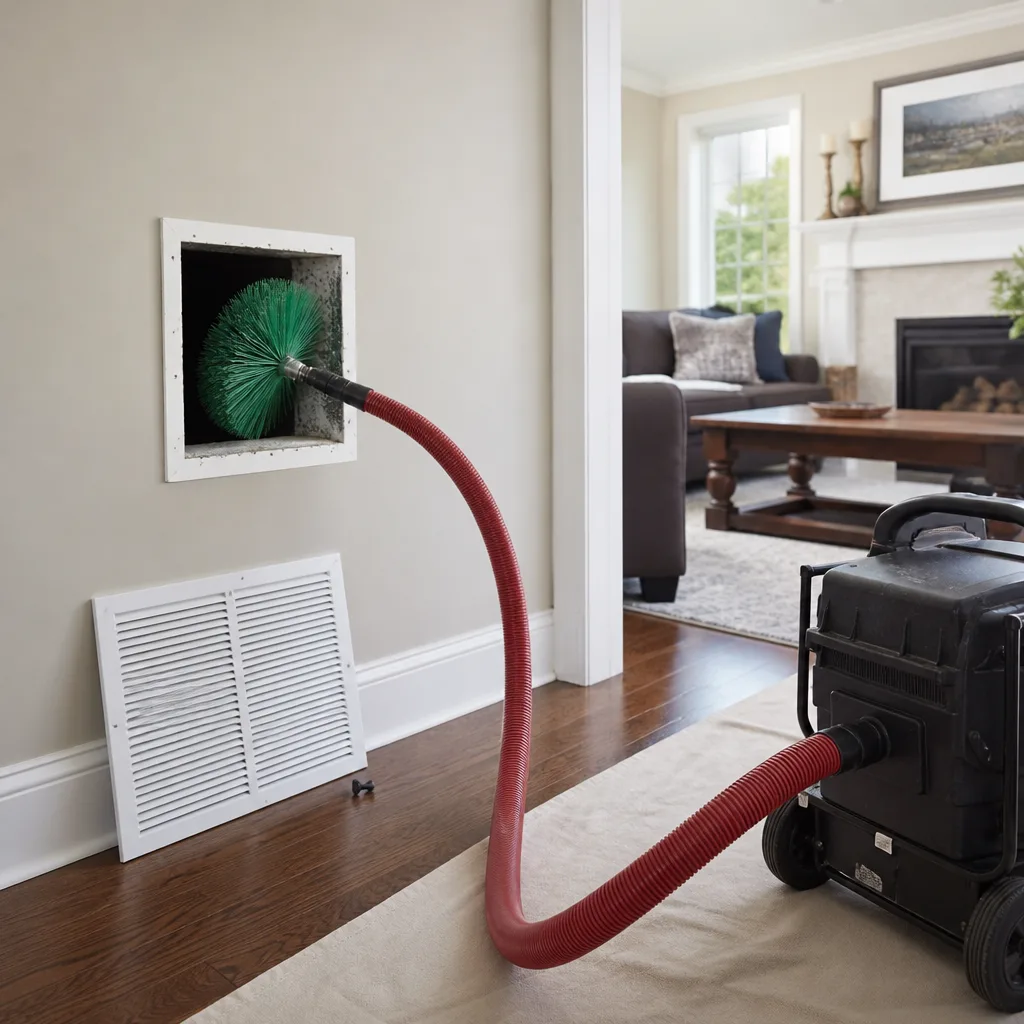
 Dryer vent cleaning
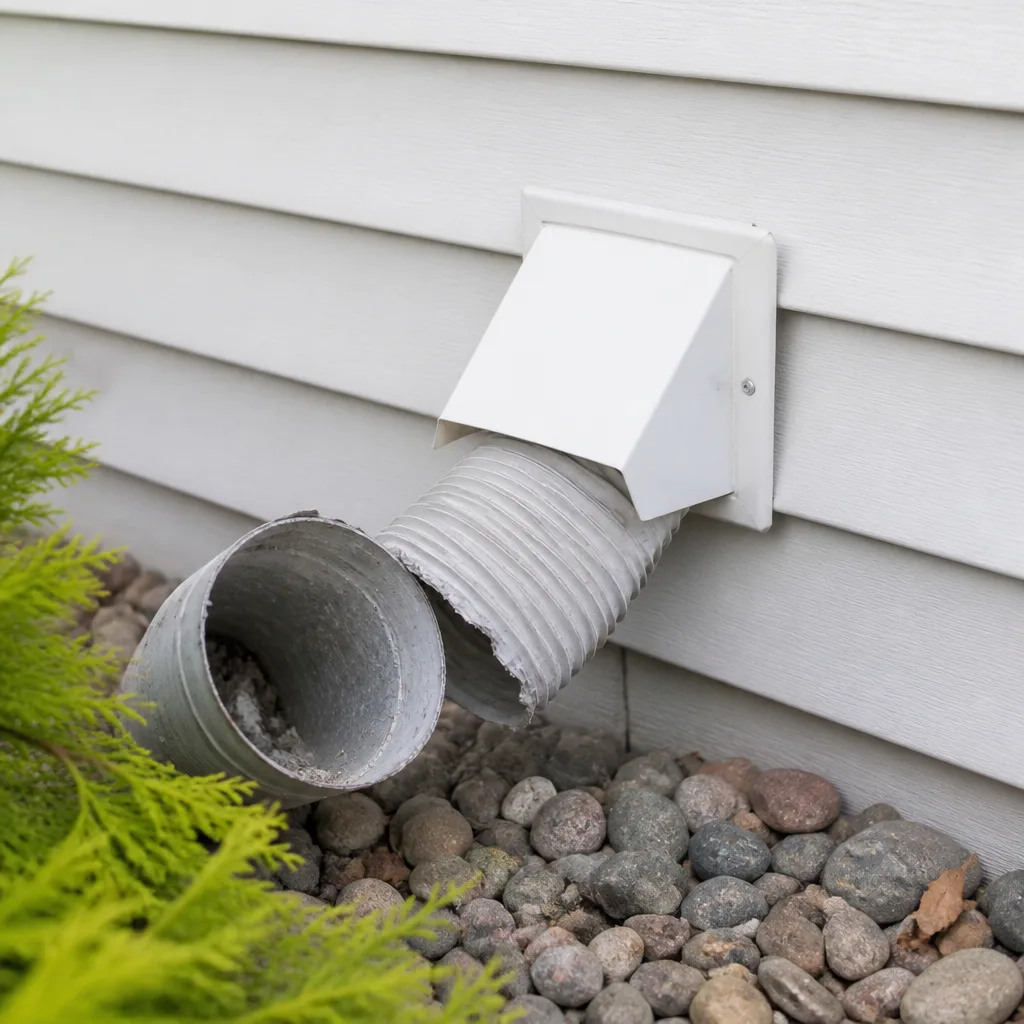
 Camera inspection
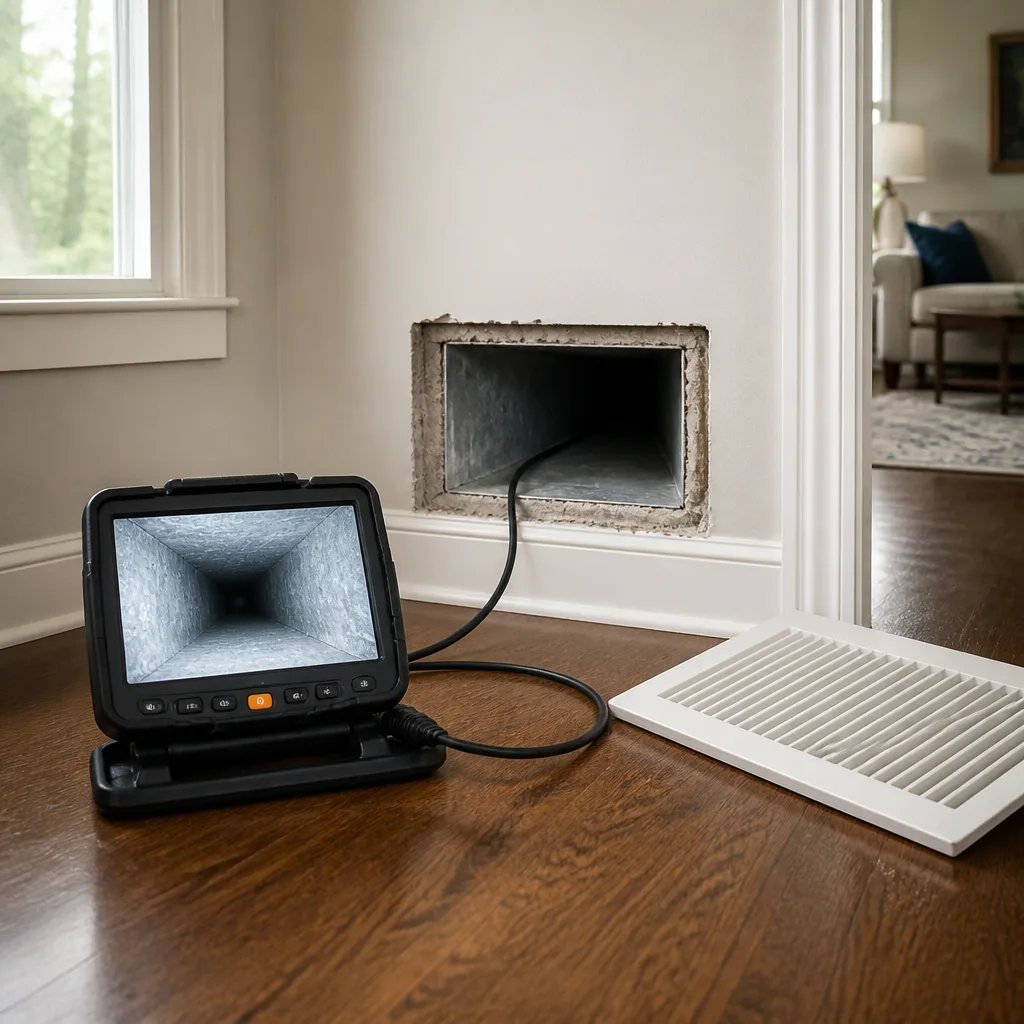
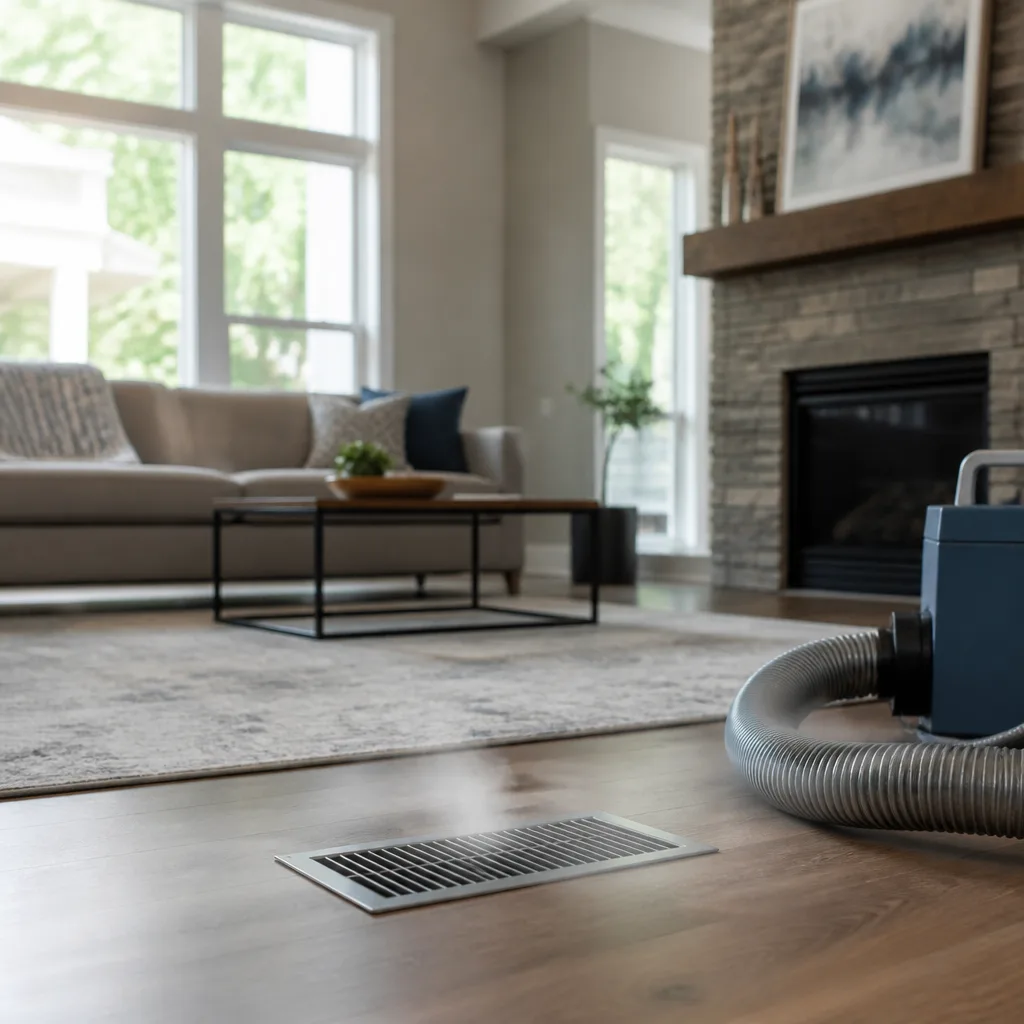 Sanitizing & deodorizing
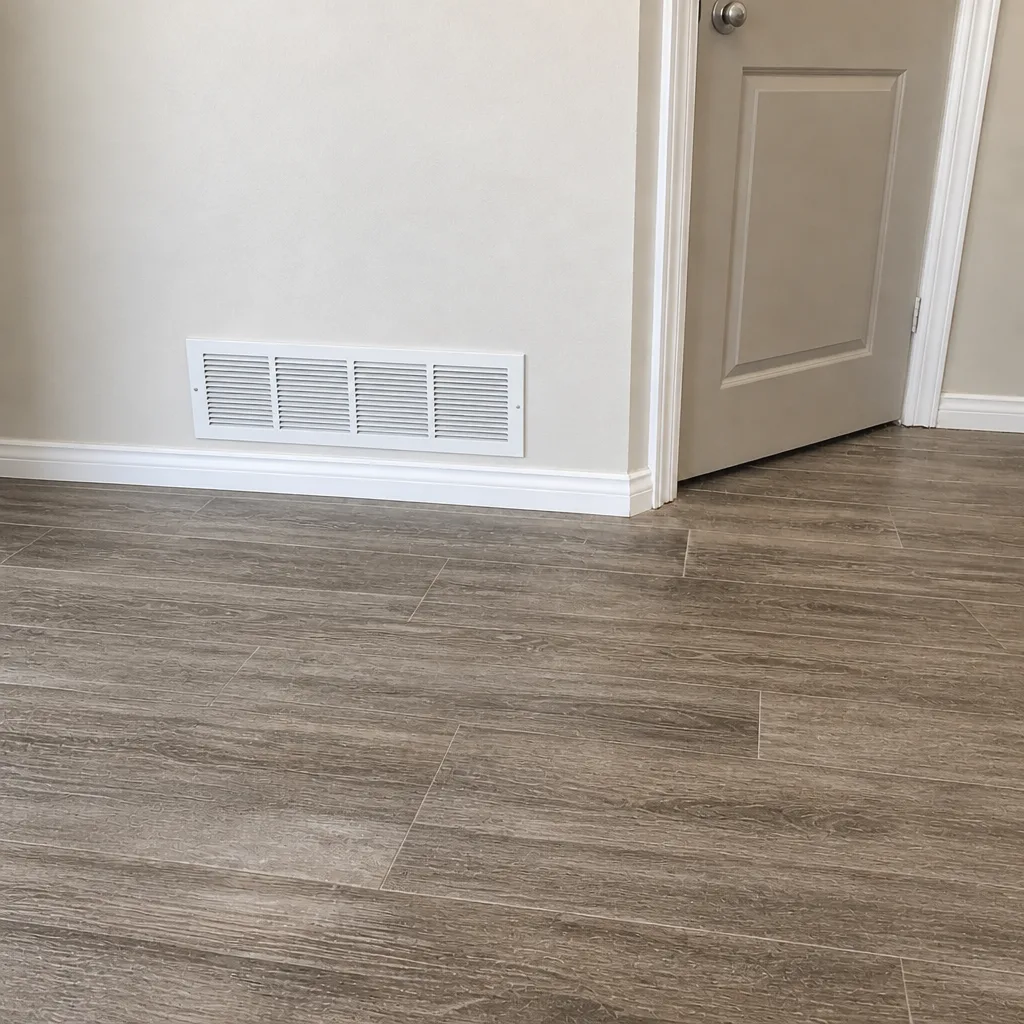
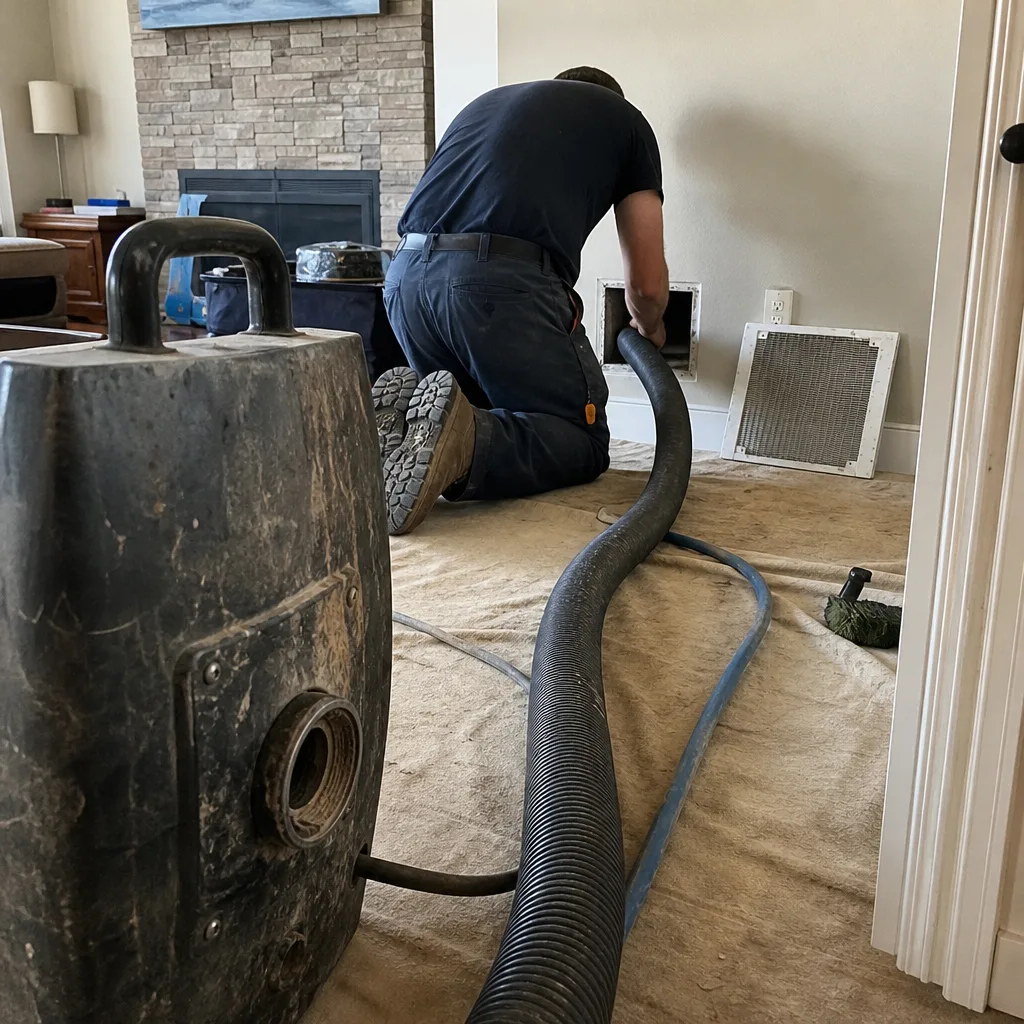
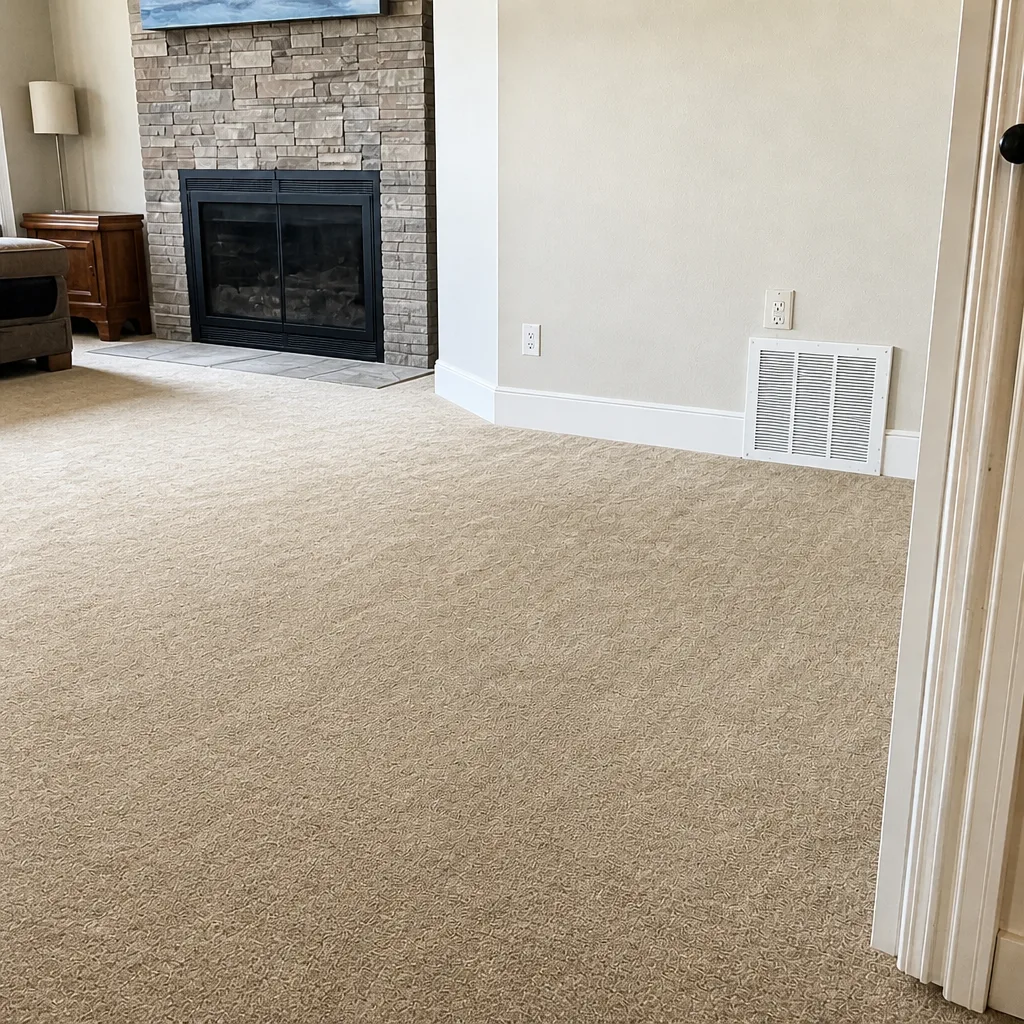
Whole-system duct and dryer vent check with before-and-after photos - you see exactly what came out of your vents
That "$99 whole-house special" is a bait ad - the real number appears once they are in your hallway, or the "clean" is a shop-vac at the register. We photograph the inside of your ducts before and after instead.
Seasonal Air Duct Cleaning Care for Cottonwood Heights: Year-Round Homeowner’s Guide
Most homeowners schedule duct cleaning when they happen to think of it, usually after noticing a dusty vent cover or a musty smell. In Cottonwood Heights, the smarter trigger is the air itself. This valley runs on four distinctly different contaminant cycles a year: winter inversion, spring cottonwood and pollen, summer wildfire smoke, and the first furnace run of fall. Each one loads your ductwork with a different kind of material, and each one calls for a different response. Treating duct care as a generic twice-a-year chore misses what your system actually collects. This guide walks through the Cottonwood Heights air year season by season and shows you what to check, when to change filters, and when a professional cleaning is genuinely warranted.
Quick Answer
In Cottonwood Heights, duct care should follow the local air cycle, not a fixed calendar: inspect after each winter inversion event and after heavy wildfire smoke, clean when you see visible buildup or your filters load fast, and use the fall to prepare for the heating season. Most homes here do well with a professional full-system cleaning roughly every one to three years, adjusted for how close you are to the valley floor, how much cottonwood seed your yard collects, and whether anyone in the home has allergies or respiratory sensitivity.
Styles & brands we work with
- Whole-home duct cleaning
- Dryer vent cleaning
- Camera inspection
- Sanitizing & deodorizing
Table of Contents
- Why Cottonwood Heights Ductwork Ages Differently
- Winter: Inversion Season and PM2.5 Loading
- Spring: Cottonwood Seed and Pollen as a Duct Event
- Summer: Wildfire Smoke and the Fine Particulate Problem
- Fall: Pre-Heating-Season Inspection Priorities
- The Month-by-Month Action Calendar
- What You Can Do Yourself vs. What Needs a Pro
- Common Mistakes to Avoid
Why Cottonwood Heights Ductwork Ages Differently
Cottonwood Heights sits against the Wasatch bench, and that geography shapes what your HVAC system breathes. Homes here range from older brick ranches near the valley floor to newer construction higher on the bench, and the ductwork varies just as widely: original galvanized trunks with decades of seams, flexible runs added during remodels, and newer homes with tighter envelopes that recirculate indoor air more than they used to.
What ties them together is the air. Cottonwood Heights pulls in air that has passed over the Salt Lake Valley floor, where winter inversions trap particulate near the ground, and air that carries the canyon winds and pollen that define spring. Add the occasional summer smoke event drifting in from regional fires, and your return-air system is functioning as a filter for a lot of material the manufacturer never intended it to collect.
That makes the calendar matter. A homeowner in Cottonwood Heights who cleans ducts in October “because that’s when I got around to it” may be cleaning right before the heaviest loading season and right after it. The order of operations changes what you actually remove.
The four local seasons, summarized
- Winter: temperature inversions concentrate fine particulate low in the valley; filters load fast and duct surfaces collect the fine grey film.
- Spring: cottonwood seed and pollen enter through open windows and through return grilles; fibrous seed clumps stick to grille faces and the return plenum.
- Summer: wildfire smoke delivers the finest particulate, the kind that slips past standard filters and settles in supply plenums and on coil surfaces.
- Fall: the first heating run burns off summer dust, and any humidifier or heat-exchanger-adjacent ductwork deserves a look before you rely on it all winter.
If you want to understand the cleaning process itself before mapping it to seasons, our guide to air duct cleaning covers the equipment and the sequence. The rest of this guide connects that process to the Cottonwood Heights air year.
Winter: Inversion Season and PM2.5 Loading
Winter is the defining air quality season in Cottonwood Heights. On calm, cold days, a layer of warmer air can settle over the valley and trap cooler air beneath it. That inversion acts like a lid: vehicle exhaust, wood smoke, and fine particulate accumulate near the valley floor instead of dispersing. The result is a stretch of days when the outdoor air is thick with PM2.5, the fine particulate small enough to travel deep into the lungs and small enough to ride your HVAC system into the ductwork.
What inversion season does to your system
A standard filter catches a good share of this, but only while it’s clean. During a multi-day inversion, a filter that’s already partway loaded stops doing its job much sooner than the calendar suggests. The material that gets past it doesn’t vanish. It deposits on return plenum walls, on the inside of supply trunks, and on the blower and coil surfaces.
- Check your filter mid-inversion, not on your usual schedule. A filter that looks fine in October can be grey and matted by mid-January.
- Watch for the fine grey film on return grille faces. That film is the visible signature of fine particulate, and it’s a reasonable early indicator.
- Note the smell. A stale, dusty, or faintly smoky odor when the furnace kicks on points to settled material that the airstream keeps stirring.
When post-inversion cleaning is warranted
You don’t need a professional cleaning after every inversion. You do want to think about it when several long inversion events stack up in one winter, when your filters are loading noticeably faster than usual, or when anyone in the home has asthma or allergies that seem worse in January and February. That pattern is the signal, not the date on the calendar.
It’s also worth being clear about the safety line here. If your concern is the furnace itself, the heat exchanger, or the gas lines feeding it, stop and call a trained professional. Carbon monoxide and gas work are not homeowner territory, and no amount of duct maintenance substitutes for a proper inspection. We connect Cottonwood Heights homeowners with independent local professionals who handle that work correctly. If you’ve been running the system hard through inversion season and want a professional assessment of the ductwork, that’s a reasonable time to have someone out.
Spring: Cottonwood Seed and Pollen as a Duct Event
Spring in Cottonwood Heights is a real contamination event, and the cottonwood trees are only half the story. The seed fluff that drifts through neighborhoods in late spring is fibrous and light, which is exactly why it finds its way onto return grille faces and into the return plenum. Pollen rides in behind it. Homes with older return grilles, the kind with wide louvers and no filtration behind them, are the most exposed.
What happens in homes with older return grilles
An older return grille does one job: it lets air back into the system. If there’s no filter at the grille, everything the air carries goes straight into the return trunk and the blower compartment. Seed clumps stick. Pollen coats the surfaces. Over a few seasons, that becomes a fibrous, dusty layer that the airstream keeps disturbing every time the fan runs.
- Inspect each return grille for accumulated seed fluff and visible dust matting. If the grille face is visibly loaded, the space behind it usually is too.
- Check whether your returns have filtration. Some older Cottonwood Heights homes have filtration only at the furnace, which means the return run itself is wide open.
- Track your allergy pattern. If symptoms linger well past the pollen peak and worsen when the HVAC runs, the duct system is a reasonable suspect.
- Look at the supply registers. A puff of dust when the system starts is normal; a steady visible stream or dark streaks around a register is not.
Why this matters more for allergy sufferers
Pollen that settles in ductwork doesn’t just sit there. The system cycles it back into the air in the home every time it runs, which means the indoor pollen load can stay elevated long after the outdoor count drops. If someone in the home has seasonal allergies, spring cleaning that removes the accumulated seed and pollen matters more than the same cleaning done in a quiet month.
For homes that collect a lot of this material, the fix isn’t only cleaning. Sealing leaky duct joints so the system stops drawing in unconditioned attic or crawlspace air is often the more durable answer, and it’s why we treat repair and sealing as part of the same relationship rather than a separate call. A local pro can tell you which problem you actually have.
Summer: Wildfire Smoke and the Fine Particulate Problem
Summer in Cottonwood Heights brings a different contaminant profile: wildfire smoke drifting in from regional fires, often arriving as a haze that settles into the valley. Smoke is mostly fine particulate, and fine particulate is exactly what a standard MERV-8 filter is not designed to stop. The larger particles get caught. The smallest ones pass through and settle downstream.
The specific problem: particulate that bypasses standard filters
A standard MERV-8 filter is a reasonable general-purpose filter, but it isn’t rated for smoke. The fine fraction travels past it and deposits in the supply plenum, on the evaporator coil, and along the inside of supply trunks. That’s the part of the system you can’t see, and it’s the part that keeps recirculating the smoke smell after the outdoor air clears.
- Smoky odor that lingers for weeks after an event points to deposited particulate the airstream is still disturbing.
- Filters that load fast during smoke events are working, but they’re a sign your system is under real load.
- Visible haze or dust at supply registers after a smoke event is worth a closer look.
How to assess post-event contamination
Don’t clean after every hazy afternoon. Do think about it after a sustained smoke event, especially one that lasted days, and especially if you kept windows open, ran a whole-house fan, or have a system with minimal filtration. A professional assessment with negative-pressure equipment shows what actually settled. Equipment like Rotobrush and Nikro systems, the kind used by certified restoration contractors, removes that material without pushing it back into the living space. Abatement Technologies equipment goes a step further and is built for contaminant control at a remediation level, which matters when the concern is fine particulate and not just visible dust.
Pairing cleaning with a filtration upgrade is often the practical move here. If your system can accept a higher-efficiency filter, a local pro can tell you what your blower can handle without overworking it. Equipment and filter compatibility vary by system, so this is a place to get specific advice rather than guessing.
Fall: Pre-Heating-Season Inspection Priorities
Fall is the season to get ahead of the system instead of reacting to it. Before you rely on the furnace for the next several months, a few checks matter more than others in Cottonwood Heights homes.
1. Heat exchanger adjacent ductwork
The ductwork immediately around the furnace is the first place a fall inspection should look, but the heat exchanger itself is not a DIY item. Cracks or corrosion in a heat exchanger can allow combustion gases into the airstream, and that’s a carbon monoxide concern. Have a trained professional inspect it. What you can do as a homeowner is know the signs: a persistent odd smell on startup, soot streaks, or a flame that looks off. Those are reasons to stop and call, not to investigate further yourself.
2. Humidifier connections
If your home has a whole-house humidifier tied into the ductwork, fall is when the connection and the water line deserve a look. A humidifier that’s been idle all summer can develop deposits or a slow leak at the connection point, and moisture inside a duct is the beginning of a microbial problem. Honeywell and Aprilaire units are common in this area, and both are serviceable when something’s off.
3. First-run odor investigation
That dusty smell on the first cold morning is normal, briefly. If it persists past the first few runs, or if it has a sharp or chemical edge, it’s worth investigating before you settle into the season. Persistent odor usually traces back to settled material in the ductwork or the coil, and cleaning is the fix when that’s the cause.
4. Full-system check before winter loading
The logic of cleaning in fall is straightforward: if you remove the accumulated spring and summer material before inversion season, your system starts the heavy-loading months with a clean filter path and clean surfaces. Cleaning after the winter instead means the system carries that load through every inversion event. Full-system HVAC cleaning addresses the coil and blower as well as the ductwork, and it’s the sensible fall move for a home that’s been through a heavy pollen and smoke year.
The Month-by-Month Action Calendar
This calendar is built around the Cottonwood Heights air cycle. It’s a guide, not a rulebook. Adjust it to your home’s age, its filtration, and how close you are to the valley floor.
Winter (December through February)
- Check the filter every 30 to 45 days during inversion stretches. Replace it when it’s visibly grey or matted, not on a fixed date.
- Walk the return grilles once a month and note any film or dust buildup.
- Keep the system fan setting consistent. Constantly switching between on and auto stirs settled material differently; pick one and stay with it.
- Book a post-inversion cleaning if the winter has stacked several long inversion events or anyone in the home has respiratory sensitivity.
Spring (March through May)
- Inspect return grilles and the plenum behind them for seed fluff and pollen matting, especially if you have older grilles without filtration.
- Change the filter after the peak cottonwood drop. The fibrous material loads a filter faster than ordinary dust.
- Evaluate return-grille filtration. Adding filtration at the return is often the highest-value improvement for a home that collects seed every year.
- Schedule cleaning if the previous fall or winter cleaning is overdue and the spring load is heavy.
Summer (June through August)
- Keep windows closed during smoke events and run the system on recirculate.
- Note filter loading during smoke. Fast loading is a signal to check again sooner.
- Assess after a sustained smoke event. Lingering odor or haze at registers is the trigger for a professional look.
- Consider a filter upgrade within what your blower can handle, and ask a pro before changing filter ratings.
Fall (September through November)
- Book a pre-heating-season inspection that covers the heat exchanger area, humidifier connections, and the duct system.
- Investigate any persistent first-run odor before the season settles in.
- Clean the full system if the year’s pollen and smoke load was heavy, so winter starts clean.
- Replace the filter at the start of the heating season regardless of how it looks.
One service that’s easy to overlook on a duct-focused calendar is dryer vent cleaning. Lint accumulates in a dryer vent year-round, independent of outdoor air quality, and a clogged vent is a fire risk that no seasonal air pattern excuses. If you haven’t had it checked in a while, put it on the fall list alongside the heating inspection.
What You Can Do Yourself vs. What Needs a Pro
A lot of duct care is genuinely DIY. Some of it belongs to a trained professional, and knowing the line protects both your system and your safety.
Homeowner tasks
- Replace filters on schedule during heavy-loading seasons. This is the single most important routine task.
- Vacuum return grille faces with a brush attachment to remove surface film and seed fluff.
- Wipe supply registers and note streaks or dust patterns.
- Watch for odor and reaction patterns that suggest buildup inside the system.
- Keep up with the calendar above so you’re checking at the right times of year.
Professional tasks
- Full-system cleaning with negative-pressure equipment that removes material rather than redistributing it.
- Duct repair and sealing for leaky joints, disconnected runs, or crushed flex.
- Coil and blower cleaning as part of full HVAC cleaning.
- Sanitizing treatments for microbial and odor control when cleaning alone leaves a residual problem.
- Any work near the heat exchanger, gas lines, or electrical components. These are professional-only for good reason.
Two jobs that need a specialist
Two components in a home genuinely reward a trained professional: the electrical panel and any gas line. If a duct job uncovers a problem with either, stop. Electricity and gas aren’t DIY territory, and the safety stakes are real. The same caution applies to the heat exchanger we covered in the fall section. A real expert flags these, and so should anyone working in your home.
Our technicians have up to 13 years of experience, and one thing that experience teaches is where to stop. Cleaning, sealing, and sanitizing we handle with professional-grade equipment: Rotobrush and Nikro negative-pressure systems, Abatement Technologies contaminant-control machinery, and Guardsman-grade sanitizing treatments. Repairs inside the electrical or gas system belong to a specialist, and we’ll tell you so.
Common Mistakes to Avoid
- Cleaning on a fixed calendar instead of the local air cycle. A home in Cottonwood Heights that cleans in October and again in April is cleaning right before and right after the two heaviest loading seasons, which means the system carries the load through winter and summer either way. Map the cleaning to the seasons here, not to habit.
- Ignoring filters during inversion events. A filter that looks fine in October can be loaded by mid-January. Check it more often during inversion season, not on the usual schedule.
- Cleaning after a smoke event without addressing filtration. Cleaning removes the deposited particulate, but if the filter rating can’t stop smoke, the same problem repeats next summer. Ask about filter compatibility and an upgrade within what the system can handle.
- Skipping the dryer vent because the ducts are the focus. A dryer vent is a separate system with its own fire risk, and it needs its own attention. Don’t assume a duct cleaning covers it.
- Treating a persistent odor as normal. A brief dusty smell on first startup is fine. A smell that lingers, or has a sharp or chemical edge, points to a real problem that’s worth investigating.
- Opening windows during smoke events to “air things out.” That pulls fine particulate directly into the system. Keep windows closed and run the system on recirculate during smoke.
- Letting a professional touch the heat exchanger without asking what they found. Ask directly. When it comes to the heat exchanger, any professional working in your home should be able to tell you clearly what they looked at and what they found.
See the difference
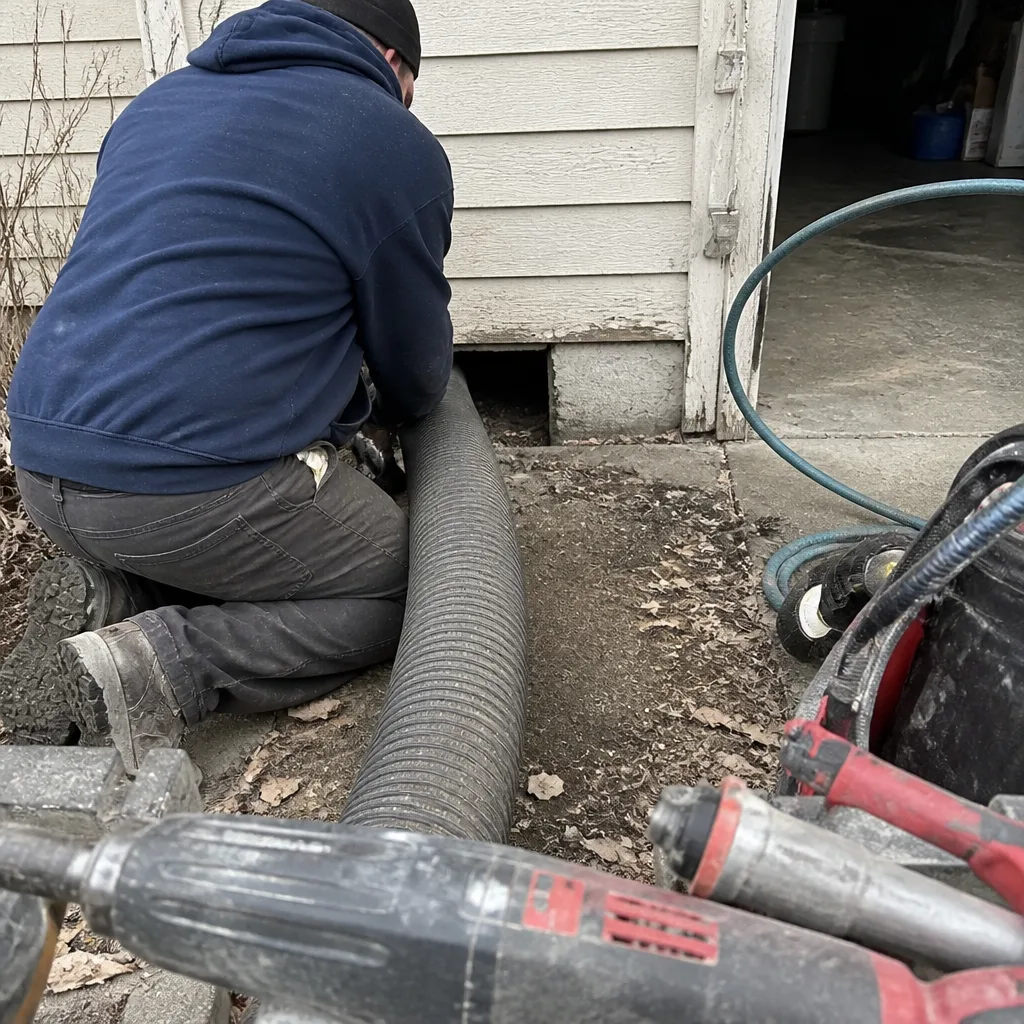 Before
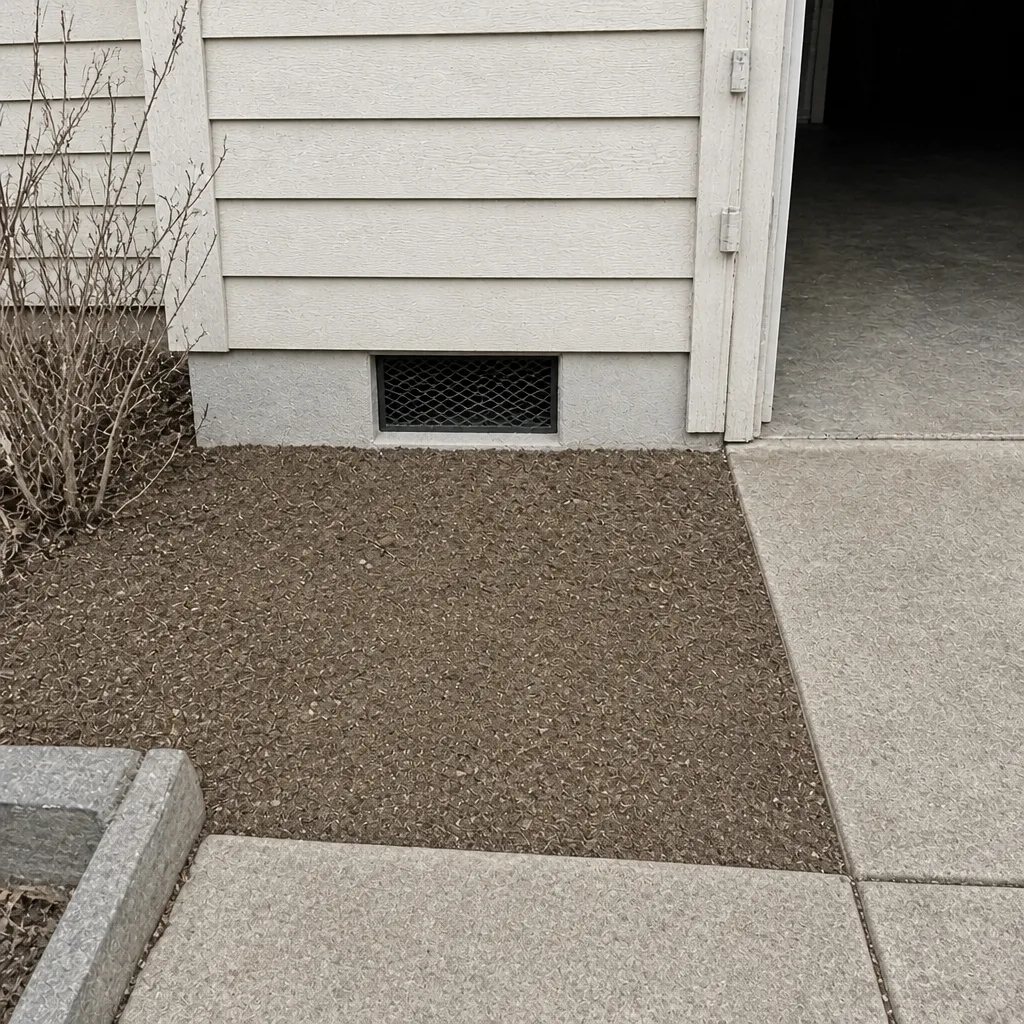 After
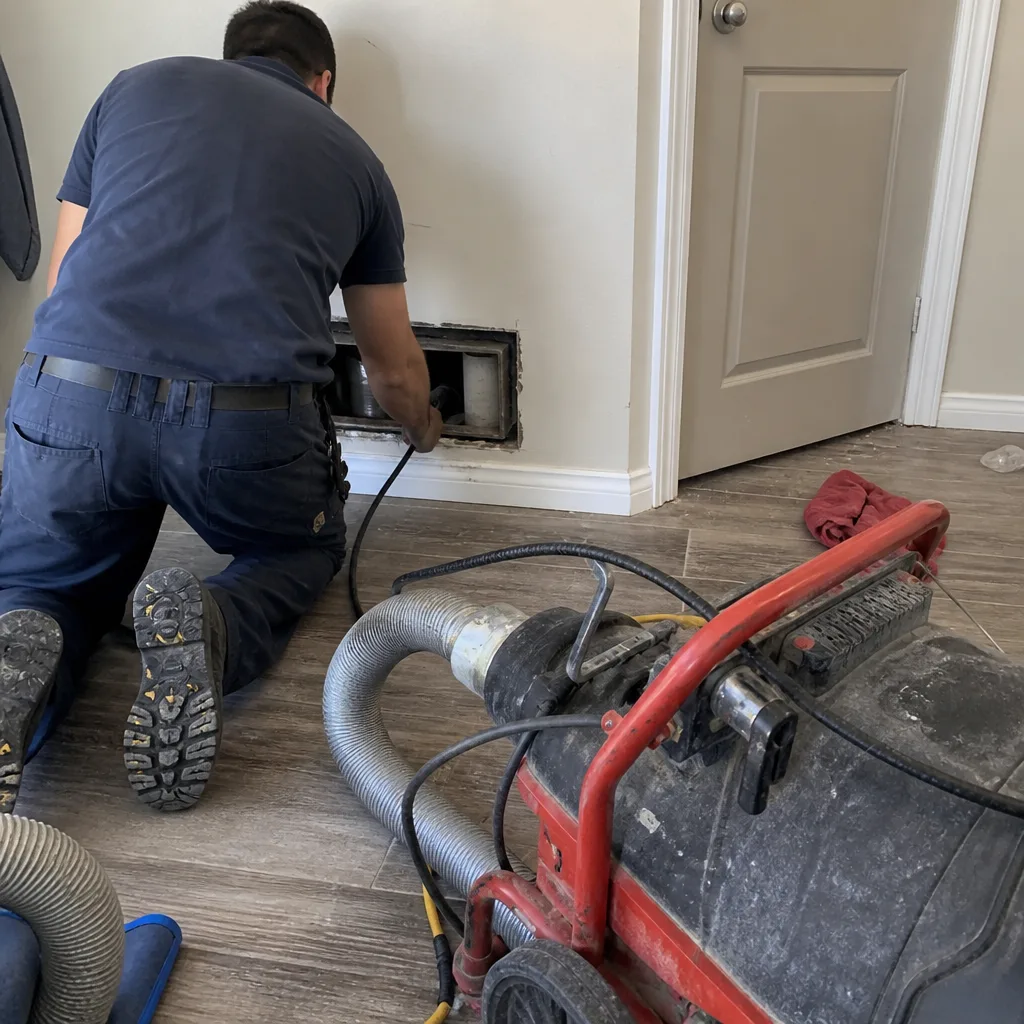 Before
 After
 Before
 After
When to Call a Professional
Some situations genuinely need a professional on site. Call when you see visible buildup in the ductwork through a register or grille, or when the system pushes a puff of dust every time it starts. Call when a persistent odor, especially a sharp or chemical one, hasn’t cleared after a filter change. Call when someone in the home has respiratory sensitivity and their symptoms track the HVAC cycle rather than the outdoor pollen count. Call after a sustained wildfire smoke event if the smell lingers. Call before the heating season if you haven’t had the system inspected in a while, and call on a separate schedule for the dryer vent regardless. If you’ve seen visible damage to ductwork, a disconnected run, or crushed flex, that’s a repair job and worth a look.
Cottonwood Heights Air Duct Cleaning offers free estimates in Cottonwood Heights. Call (866) 937-8903. We answer 24/7. Fast dispatch from 7am to 7pm, Sunday through Friday. A local pro comes to your home, assesses what’s actually there, and tells you what it needs. No per-vent pricing, no surprise upsells, photos of what we find and what we remove. The price is set per job by the written estimate before any work begins.
Frequently Asked Questions
Most homes in Cottonwood Heights do well with a professional full-system cleaning roughly every one to three years, adjusted for how close you are to the valley floor, how much cottonwood seed your yard collects, and whether anyone in the home has allergies or respiratory sensitivity. Cleaning in the fall, before inversion season, gets you ahead of the heaviest loading months rather than reacting after them. Call (866) 937-8903 for an exact quote, since estimates are free.
Yes, inversion events matter more in Cottonwood Heights than most seasonal factors because they concentrate PM2.5 near the valley floor for days at a time. That fine particulate loads your filters faster than your schedule expects, and what gets past them deposits on duct surfaces. You don’t need a cleaning after every inversion, but a winter with several long events is a reasonable trigger. Call (866) 937-8903 to talk through your situation.
They can, especially in homes with older return grilles and no filtration at the return. Cottonwood seed is fibrous and light, and it collects on grille faces and in the return plenum, with pollen riding in behind it. If your returns are wide open, the seed goes straight into the system. Call (866) 937-8903 for an assessment.
It can when the smell is coming from settled particulate in the ductwork and on the coil. Smoke carries fine particulate that bypasses standard MERV-8 filters and deposits in the supply plenum and along supply trunks, and that’s what keeps the smell circulating. Cleaning with the right equipment removes it, but only if the deposit is the actual cause. Call (866) 937-8903 and we’ll help you figure out whether cleaning is the fix.
Duct cleaning addresses the ductwork: the return and supply runs and the plenum surfaces. HVAC cleaning goes further and includes the components the air moves across, like the evaporator coil and blower. Many homes need both, especially after a heavy pollen or smoke year. Call (866) 937-8903 for an exact quote on what your system actually needs.
No, the dryer vent is a separate system on its own schedule. Lint accumulates year-round regardless of outdoor air quality, and a clogged vent is a fire risk. Treat it as a separate item on the fall list, not something a duct cleaning covers. Call (866) 937-8903 for a free estimate.
The Bottom Line
Cottonwood Heights runs on four genuinely different air seasons, and duct care works best when it follows that cycle instead of a generic reminder. Winter inversion loads fine particulate into the system. Spring brings cottonwood seed and pollen. Summer smoke slips past standard filters and settles downstream. Fall is the window to clean and inspect before the heating season. Check filters on the local cycle rather than a fixed date, keep the dryer vent on its own schedule, and call a professional when you see visible buildup, a lingering odor, or damage. A local pro can assess what’s actually in your system. Call (866) 937-8903 for a free estimate. Estimates are free, one flat price per system is agreed before work begins, and you get before-and-after photos of your own ducts.
Written by the team at Cottonwood Heights Air Duct Cleaning.